
Owner seeks four home sites on 25-acre Tazewell parcel; neighbors cite prime farmland loss and hunting impacts
Get AI-powered insights, summaries, and transcripts
Subscribe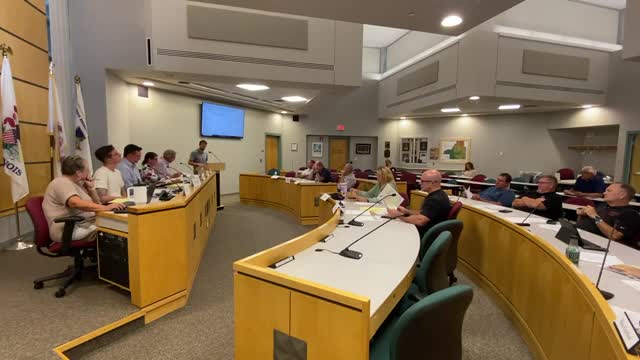
Summary
Brad Sauer asked the Tazewell County Zoning Board of Appeals for a variance and a special‑use permit to divide a 25.62‑acre parcel into four buildable home sites, drawing objections from Tri‑County planners and multiple neighbors over loss of productive soils and impacts on hunting access.
Brad Sauer asked the Tazewell County Zoning Board of Appeals for two approvals — a variance to allow more than one dwelling site to be created by special use and a special‑use approval to subdivide a 25.62‑acre parcel into four buildable home sites (cases 2542B and 2543S). The request drew lengthy public comment Thursday from neighbors and county planners and no final vote was taken.
The matter matters because the county zoning and comprehensive‑plan framework is intended to limit suburban‑style subdivision of agricultural land. Tri‑County planning staff found the application inconsistent with the county comprehensive plan and flagged removal of productive soils; Tazewell County Soil and Water recommended denial because “prime farmland” would be taken out of production. Community development staff explained the petitioner withdrew an earlier rezoning request and returned with a combination of variance and special‑use applications to limit the number of buildable lots to four.
Petitioner Brad Sauer said he intends to create four buildable lots with road access from Lake Windermere Road and that the acreage proposed is the least productive portion of his larger tract. He told the board the soil on most of the 25‑acre parcel is a Rosetta silt loam with a soil productivity index (PI) he described as 114. Tri‑County staff disputed that characterization, citing mapping that shows multiple soil types most of which exceed a PI of 125. Adam, Tri‑County planner, summarized staff concerns that the proposal would remove productive agricultural land and so “the proposal was not consistent with the purposes, goals, and objectives” of the comprehensive plan.
Neighbors opposed. Kate Vandenberg, who lives nearby and submitted a petition with roughly 80 signatures, challenged factual statements in the application and argued approval would create a damaging precedent: “Approving this application without meeting those standards would signal that Tazewell County’s agricultural preservation zoning could be bypassed,” she said. Jared Beckendorf, whose property borders the parcel on multiple sides, told the board the split would materially reduce his ability to hunt on and enjoy his land and said the change could lower the market value of his property.
Board members and staff discussed technical constraints including soil productivity indices, presence of an existing flag lot and an underground pipeline easement crossing the site, and how conditions might mitigate neighbor concerns. Several objectors asked the board to require a maximum building setback from the road (they proposed 600 feet) so new houses would be closer to Lake Windermere Road and farther from existing homes used for hunting; petitioner said he would be willing to accept a condition limiting where future homes can be sited. No binding decision was recorded; the board scheduled deliberations and possible conditions for a later action.
Because no formal vote was recorded at the hearing, the request remains pending. If the board approves the special use it would need to record any conditions on the final plat and follow up with permitting and health‑department approvals (wells, septic) before new dwellings could be built.