
Historic Review Board denies proposed large house at 203 South Oak as presented
Get AI-powered insights, summaries, and transcripts
Subscribe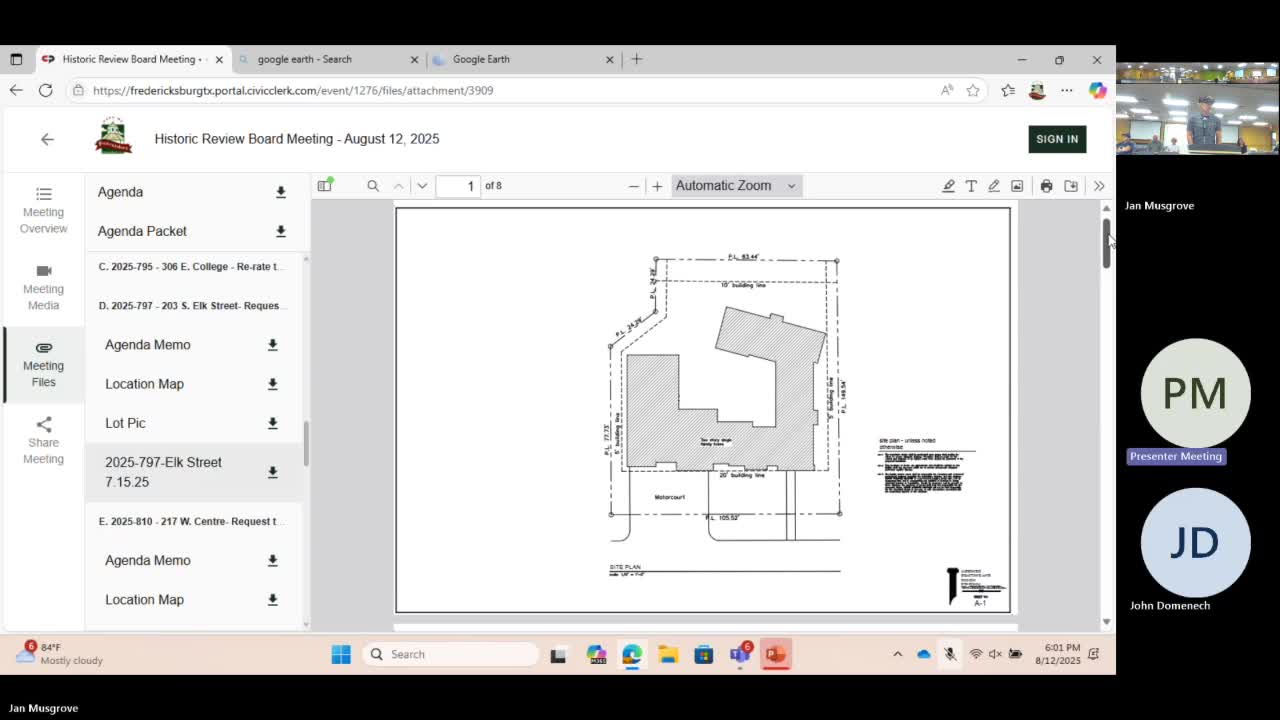
Summary
The Historic Review Board on Aug. 12 denied the certificate‑of‑appropriateness application for 203 South Oak (application 2025‑797203) after members concluded the proposed two‑story residence would be too large and visually dominant for the block.
The Historic Review Board on Aug. 12 denied the certificate‑of‑appropriateness application for 203 South Oak (application 2025‑797203) after members concluded the proposed new two‑story residence would be too large and visually dominant for the block. The applicant had sought permission to build an approximately 3,249‑square‑foot primary residence with an approximate 1,200‑square‑foot attached garage, producing roughly 4,400 square feet of structure and a maximum height near the code cap cited by staff.
Board members and staff said the project’s massing and garage placement raised the most concern. Staff told the board the garage appeared to exceed the guideline limit that the garage frontage should not be greater than one‑third of the front elevation, and several board members said the proposed width, lot coverage and multiple roof forms made the house feel outsized on the two‑lot site. Staff also noted the project would need lot consolidation and additional zoning/permitting review before any building permit could be issued.
Why it matters: The board said an unusually large, highly articulated new house on a modest historic district lot could set a precedent for massing and visual impact on neighboring historic properties. Several members recommended simplifying rooflines, reducing the garage frontage, and revising the pitch and proportions before the board would consider returning plans.
Staff summary and concerns Staff presented the application and told the board that the lot had been treated as two legal lots of record and that the applicant should consolidate lots for setbacks and impervious‑surface calculations. Staff also flagged the approximate 29‑foot height, close to the district maximum, and said the proposed garage width appeared to violate the guidance limiting garage frontage to one‑third of the house front. Staff recommended careful review of massing, lot coverage and streetscape compatibility before approval.
Board discussion and next steps Board members suggested a set of changes for the applicant: reduce roof pitches to lower peak heights, simplify the multiple roof forms to lessen visual complexity, reduce garage frontage or reconfigure the garage so it does not dominate the front elevation, and work with staff on lot consolidation and zoning issues. The board also discussed options for denying as presented while waiving reapplication fees to allow a revised design to return for review.
Formal action The board voted to deny the application as presented and directed staff to work with the applicant on revisions; the board also indicated it would waive future reapplication fees to encourage a redesign and timely return to the board.
What’s next Staff and the applicant were encouraged to meet to refine massing and compliance with the district’s numeric guidelines (garage width, lot coverage, height) and to return with revised drawings. The board said a simplified roof plan and reduced garage prominence would make a revisit more likely to succeed.