
Contested Smeltertown rezoning for proposed ice rink draws residents— calls for traffic and environmental studies
Get AI-powered insights, summaries, and transcripts
Subscribe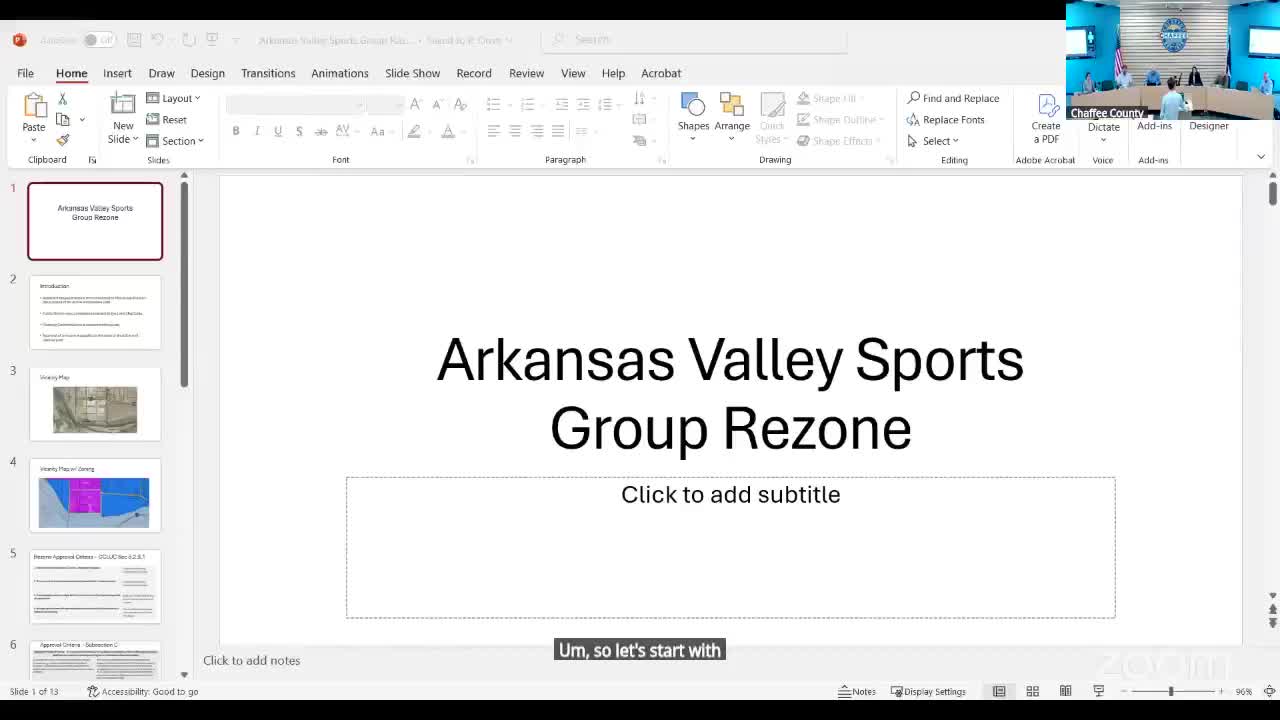
Summary
Chaffee County commissioners on Aug. 19 heard extended public comment and a planning staff report on a conditional rezone request from industrial to mixed-use rural for two Smeltertown parcels proposed as an ice rink and a riverside park.
Chaffee County commissioners on Aug. 19 heard extended public comment and a planning staff report on a conditional rezone request from industrial to mixed-use rural for two Smeltertown parcels proposed as an ice rink and a riverside passive park. Applicants with the Arkansas Valley Sports Group (AVSG) said they bought the parcels to create an affordable ice facility and community recreation space; neighbors and multiple county speakers urged more traffic, environmental and drainage analysis before any entitlement change.
Planning staff told the board the request would require later administrative review if the zone change is approved, but that the mixed-use-rural district better matches the future-land-use guidance in the county comprehensive plan than the current industrial zoning. Staff also flagged a countywide shortage of industrially zoned land and noted that some industrial uses have setbacks from mixed-use-rural boundaries, which could create new nonconformities if the rezone proceeds.
The applicants, Rich Parker and John Fritz of AVSG, said the nonprofit group and its 501(c)(3) partner have built local ice programming and that a permanent rink would expand year-to-year recreation and youth opportunities. "We've dedicated countless hours and personally financed this land, not for financial profit, but for donation to the community," Parker told the board. The applicants described a one-sheet rink with gravel parking, a planned entrance and exit flow to limit conflicts, and a closed-loop saltwater refrigeration system for the ice surface. They said tournaments would be occasional and that routine practices would generate modest, scheduled traffic.
Neighbors, business owners and multiple technical commenters disagreed that the project can proceed without further studies. Speakers representing Smeltertown said the requested change would insert public-facing uses into a working industrial core that currently operates with weekday industrial hours, limited nighttime lighting and heavy vehicles. Those neighbors asked the commissioners to require a compliant Institute of Transportation Engineers (ITE) trip estimate, an Appendix D traffic assessment (as described in the county land-use code), and, if warranted, a full traffic-impact study that scopes intersection turn-lane needs and queuing impacts before rezoning. Several public speakers also requested formal referrals to Road & Bridge and documentation of any Colorado Department of Transportation access permit needs for the State Highway 291 intersection.
Environmental and hazard concerns were a second major theme. Commenters asked for front-loaded submittals related to river setbacks (the county code generally requires a 100-foot setback from the Arkansas River), fluvial-hazard mapping, visual-impact/sensitive-vista analysis for river views, and geotechnical/hillside review where slopes exceed mapped thresholds. A handful of speakers noted that the applicants supplied draft environmental reports that were not performed on the actual parcels and cannot, in their view, stand as a public record.
Multiple residents emphasized that County Road 152 is a dead-end, low-volume rural road and argued that combined parking, drop-off and tournament periods would push more than the road—s safe capacity. "This description matches the dead-end segment of County Road 152," one resident said, asking the board to treat that functional test as dispositive under the land-use code. Others asked that any conditions for mitigation be secured in a development agreement with financial security before any zone change is adopted.
Board members did not vote on the rezone during the hearing. Commissioners accepted the public record and questions for county staff and applicants; the applicants and the planning department will be asked to supply the traffic and resource analyses the record currently lacks. The rezoning remains under consideration pending those materials.
Why it matters: the issue pits preservation of scarce industrial land and local road safety against a privately funded, nonprofit-led effort to create a community ice facility and associated recreation. The decision will affect who decides future approvals (the board versus administrative staff) and whether key studies and mitigation are required before entitlements change.
Local context and next steps: planning staff said a zoning-permit application would follow only if the board rezones the parcels; the zoning permit review would then evaluate access, stormwater, geotechnical and other details. Several residents asked the board to require an Appendix D traffic assessment and any needed traffic-impact study and to secure improvements through a development agreement before approving the rezone.
Ending: The board left the public hearing open and requested additional, formal technical materials and agency referrals before taking any action.