Get Full Government Meeting Transcripts, Videos, & Alerts Forever!
Get email alerts on the Executive Session Scope topic
No spam. Unsubscribe anytime.
City attorney tells The Dalles council merit-pay and contract negotiations must be handled in open session
Summary
City Attorney advised the council that the executive session notice covers only performance evaluations; any discussion of merit increases, compensation or negotiated contract changes for the city manager and the municipal judge must occur in open session or be handled through authorized negotiators and returned to the council for formal action.
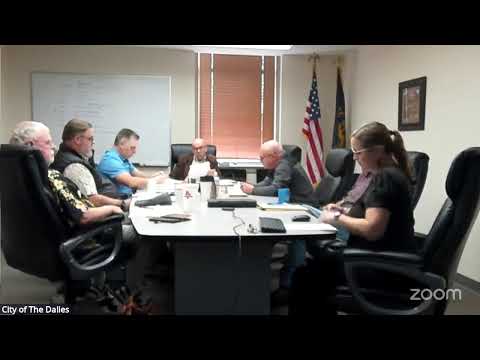
The Dalles City Attorney advised the City Council on Oct. 12 that the meeting's executive session is limited to reviewing performance evaluations and cannot be used to decide merit increases or negotiate contract compensation.
The guidance matters because the council had flagged contractual merit issues involving two employees, identified in the meeting as Matthew and Jonathan; the attorney said any discussions about pay or contract terms must be open to the public or undertaken through an authorized negotiator and later returned to the council as a formal action.
"No final decisions are made in executive session ever. Right. The only thing you can talk about when you hit that gavel for executive session is how did we do last year?" the City Attorney said, advising that salary levels and merit increases "have to be done in session." The attorney added that if councilors had procedural questions they could contact counsel directly by phone or text for quick legal guidance.
The attorney outlined three broad options: (1) discuss and adopt merit or compensation adjustments in open session after the evaluations; (2) authorize the mayor or a designated negotiator (for example, an identified staff member named Rich) to negotiate on council's behalf and require the negotiator to return to council with a proposed agreement for formal approval; or (3) place the matter on a future publicly noticed meeting or consent agenda for action. The attorney cautioned that notice requirements apply for reopening public discussion or taking action and said the council could not complete any final compensation action during the closed session.
Council members asked whether a decision could be adopted the same day; the attorney and other participants said council could return to open session and make a decision there, but that authorizing a negotiator who then returns with a proposal would require public notice before a final vote. One councilor noted the typical public-notice timeframe referenced in the discussion (48 hours), while another suggested the notice requirement might differ in nonemergency circumstances.
The meeting also confirmed scheduling details for individual evaluations and a related participant: Judge Corey is available only at 1:00 p.m., and the City Attorney said representatives of the news media were directed not to attend the executive session and that no decisions would be made while the session was closed. The council planned to recall the affected employees to an open session when the executive-review portion concluded so the employees could be part of any subsequent open discussion.
No motions or votes on merit increases or contract changes were taken during the meeting; the attorney said any final outcome would need to be returned to council as an action item for public consideration.