Get Full Government Meeting Transcripts, Videos, & Alerts Forever!
Get email alerts on the Land Use Planning topic
No spam. Unsubscribe anytime.
Council hears staff proposal to reduce Planning Commission meetings and use hearings officer for land-use appeals
Summary
Staff proposed reducing Planning Commission meetings from two to one per month and contracting a professional hearings officer to handle quasi-judicial land-use matters; council heard experiences from Wasco County and signaled general support for pursuing details but took no final action.
City planning staff presented two reforms intended to increase efficiency: (1) reduce Planning Commission meetings from twice monthly to once monthly (recommended first Thursday of each month), and (2) contract a professional hearings officer (typically a land use attorney) to hear quasi-judicial land-use matters such as appeals of administrative decisions, conditional use permits and variances. Staff proposed an initial FY 2025–26 budget allocation of $10,000 to pilot hearings-officer services and noted that Wasco County implemented a similar model.
Community Development Director Joshua Chandler reviewed the rationale: many planning commission meetings are canceled for lack of business, commissioners have a heavy long-range workload and hearings can be lengthy. Chandler said quotes for external hearings officers ranged from $135 to $350 per hour, and that Wasco County saw hearing times drop from multi-hour proceedings to 20–30 minutes when using a hearings officer. Chandler recommended that council retain final appeal authority; the hearings officer would make initial decisions and city council would remain the appellate body.
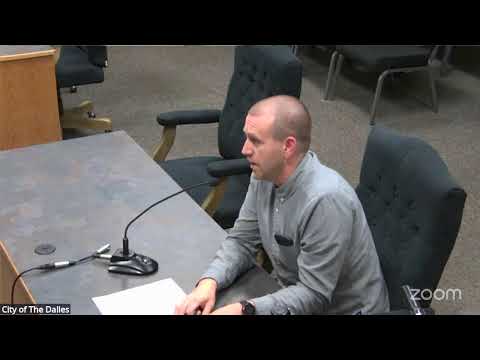
Kelly Housley Glover, Wasco County Community Development Director, told the council Wasco County’s experience had been “tremendously successful,” citing reduced meeting fatigue, faster turnaround for applicants, clearer legally defensible findings, and fewer procedural errors that lead to appeals. She said some long-range workload driven by state legislative changes had contributed to county commissioners’ decision to move to the hearings-officer model.
Council members discussed tradeoffs: reduced staff time and shorter hearings versus the cost of contracting and concerns about loss of local context. City Attorney and other staff noted hearings officers can improve the legal defensibility of findings and reduce the risk and expense of appeals to the Land Use Board of Appeals. Several councilors signaled support for moving forward with more detailed analysis, code amendments and a possible RFP if the council chooses to proceed; no formal council action was taken at this meeting.
Staff said an implementation timeline could allow for a winter 2026 start if the council directs further work; code amendments to municipal code titles 10 and 11 would be needed before the change.