Get Full Government Meeting Transcripts, Videos, & Alerts Forever!
Get email alerts on the Strategic Planning topic
No spam. Unsubscribe anytime.
Tazewell County holds strategic-planning workshop; board identifies strengths and weaknesses
Summary
Tazewell County's committee of the whole met for a facilitator-led strategic-planning workshop that included a DISC team exercise, review of draft mission and vision language, and a board-sourced list of county strengths and weaknesses. No formal votes were taken.
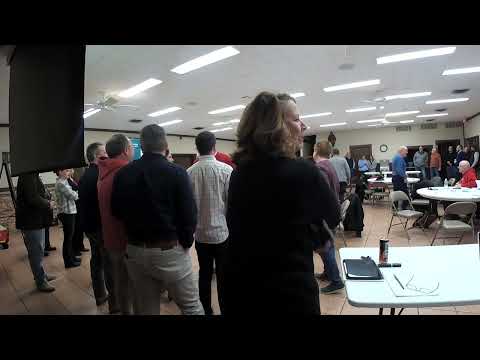
Tazewell County’s committee of the whole met for a strategic-planning workshop facilitated by Jim Arndt, president and CEO of Armed Municipal Support, to review draft mission and vision statements, discuss department goals and collect board feedback for a multi-day strategic-plan effort.
Arndt told the group the plan “will not work unless you work the plan,” and asked participants to speak up during exercises so comments could be recorded. The session combined a team-building DISC exercise with a review of input Arndt had collected from individual board members and several department directors.
The workshop’s nut graf: county officials said the session is intended to produce a strategic plan that frames county priorities and departmental goals; participants described it as an early-stage, internal planning exercise rather than a setting for formal votes or ordinance decisions.
During the meeting, Arndt summarized board-supplied strengths of Tazewell County, including roads and bridges, the health department, the industrial base, financial reserves, low tax rates, departmental cooperation, longevity of employees, a diverse local economy and strong agricultural and transportation infrastructure. He said those items repeatedly arose in one-on-one conversations with board members.
Arndt also relayed a set of weaknesses the board raised: lack of teamwork, a learning curve for new board members, aging county facilities, outdated systems, homelessness, slower pace of change, an aging population and a lack of prepared industrial property. “We talked about the strengths, the weaknesses, the opportunities, the threats,” Arndt said while summarizing the feedback he collected.
The meeting included a DISC-style team assessment intended to help board members understand differing communication and decision-making styles; Arndt led participants through identifying dominant styles and discussed how different styles can cause conflict or create complementary team roles. The facilitator said the workshop agenda also included reviewing department director goals and organizational values, and that the group would continue work during the evening and on Saturday.
Several county officials introduced themselves and their roles during the session. Brett Grim, county board chair, and Mike Deluri, county administrator, were present; Deluri told the group he has worked in county government for about two and a half years. John Ackerman identified himself as county clerk; Dan Sullivan identified himself as chief deputy county clerk and said he has worked in government for over 24 years. John Rand identified himself as director of the probation department with roughly 27 years of experience. Russ Crawford and Mark Goddard also identified themselves as county board members.
No formal motions, votes or policy adoptions were recorded in the transcript excerpt of the workshop. Arndt and participants described the session as an information- and alignment-focused event designed to produce draft language and priorities for later formal consideration by the board.
Next steps, as described in the meeting, include further work on draft mission and vision statements, review of department-level goals and continued exercises during the multi-day planning effort; no formal deadlines or implementation assignments were specified in the excerpted discussion.