Get Full Government Meeting Transcripts, Videos, & Alerts Forever!
Get email alerts on the County Highway Operations topic
No spam. Unsubscribe anytime.
Tazewell County engineer outlines road and bridge priorities, funding limits
Summary
Dan Parr, Tazewell County engineer, briefed county officials on the highway department's priorities including bridge inspections under IDOT rules, use of a PACER pavement-rating program, a five-year project list, funding sources and equipment upgrades; no formal votes were taken.
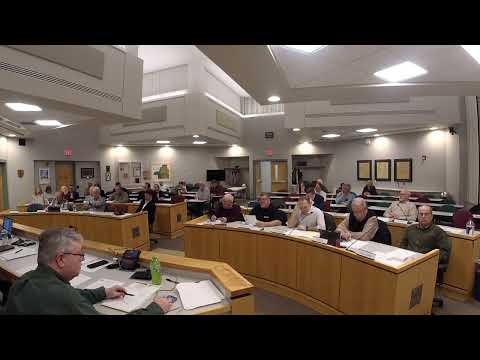
Dan Parr, county engineer for the Tazewell County Highway Department, told county officials at a meeting (date not specified) that the department’s top priority is preserving roads and bridges while managing limited funding and workforce resources.
Parr said the department uses a program called PACER to evaluate and rate road segments, and that bridges receive sufficiency ratings through the Illinois Department of Transportation inspection process. "Our goal here at the highway department is save roads. That's number 1," Parr said, describing how those ratings feed into a five-year program and project priorities.
The nut of Parr’s presentation was funding and how the department allocates scarce dollars. He described multiple local levy funds and state program interactions: county highway and township bridge funds (property-tax levies), county and township motor fuel taxes, and a locally levied matching tax used to provide the nonfederal share on projects. Parr clarified that the term "federal" in the matching-levy name refers to matching federal funds, but the levy itself is collected locally from property taxes.
Parr discussed the contract-bridge program, which he characterized in meeting remarks as an "80/20" arrangement (referred to in the meeting as "pays 80/20") and said there has been discussion that the state might change the program to cover 100% in some cases. He said competitive bidding is required by law for projects above $30,000 for a road district and that the department follows IDOT manuals and procedures for design and construction oversight.
He provided project and inventory figures: the highway department maintains about 184 bridges, roughly 203 miles of county road and 890 miles of township road, and employs 17 staff members (about 11 maintenance crew and the remainder in the office). Parr also described equipment upgrades—new Western Star snow trucks with improved air intake systems, v-plows, a new heated patching machine—and said the upfront cost of higher-quality trucks pays off at trade-in.
Parr recounted records and right-of-way work that helped the county avoid costs, saying recovery of historical road records saved the county more than $200,000 in one episode related to Broadway Road. He also described routine duties: mowing rights-of-way, drainage and ditch work in an agricultural region, coordination with the metropolitan planning organization, assisting township road commissioners and responding to public inquiries.
Board members and other meeting participants asked clarification questions during and after the presentation about insurance on a bridge hit by a vehicle, how matching-levy invoices are processed, the department’s reliance on property-tax levies, and whether eminent domain had been used; Parr said he has used eminent domain once during his tenure and described it as lengthy and costly. No motions or votes were recorded on the highway items in the transcript.
The presentation highlighted funding constraints that have reduced mill-and-overlay performance over the years: Parr said the county used to mill and overlay about 20 miles annually and is now down to roughly seven miles, and he noted rising per-mile costs for milling and overlay. He said the department is experimenting with sealcoat and other preservation techniques to stretch funding.
Parr also mentioned coordination with IDOT and consultants on bridges and right-of-way acquisition, the requirement for licensed structural engineers on bridge design, and nonroutine responses such as assistance after a tornado in Washington. He emphasized that the department prioritizes safety and asset preservation while balancing competing demands from agriculture, drainage needs and public requests.
No formal board actions on projects, budgets or policy changes were recorded in the transcript excerpt provided. Parr’s presentation concluded with brief commendations from meeting participants.