District health services reports higher communicable disease counts, expands school-based care programs
August 12, 2025 | Burlington Area School District, School Districts, Wisconsin
This article was created by AI summarizing key points discussed. AI makes mistakes, so for full details and context, please refer to the video of the full meeting. Please report any errors so we can fix them. Report an error »
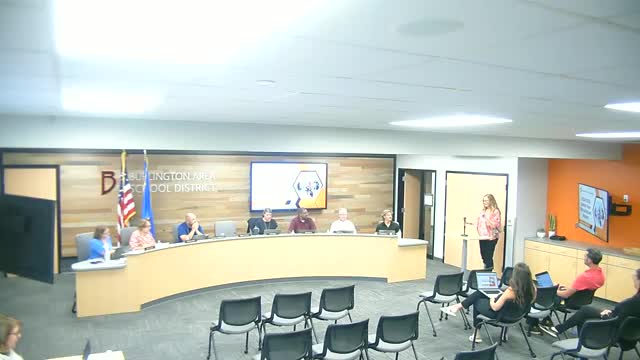
The report matters because it documents student health trends, readiness for the new school year and operational changes that affect daily school safety and health services across district buildings.
Jill said the health team completed vision and hearing screenings at scheduled grade levels and reported referral rates of about 9.5% for vision and roughly 6% for hearing. She told the board the district screened an additional 75 children at a spring 4K screening event for incoming students.
Jill said dental screenings (the district's "Seal to Smile" program) produced about an 11% urgent-dental referral rate for students with issues such as abscesses. She also reported that 1,016 students (about 35% of an enrollment she cited as 2,901) had documented health conditions requiring ongoing monitoring and plans.
The report noted communicable diseases rose compared with the previous year: total reported communicable-disease incidents were 370 this year versus 301 the prior year, and school influenza, pneumonia and RSV counts were up, consistent with statewide reports. Jill told the board that the winter influenza season was "brutal," and the district's numbers reflected that trend.
Jill reviewed health-room visits and medication administration across several years to show patterns since the COVID period; she said health-room visit totals fell sharply in the COVID year and then recovered. The district also logged increases in student accident and head-injury reports this year; Jill said part of that rise may reflect a recently added health aide whose reporting improved documentation.
On services and staffing, Jill described the district's health staffing model: one year-round lead (the presenter), one half-time school nurse (Molly), four full-time health aides during the school year and two dual-role employees who split time between administrative assistance and health-aide duties. Erin, an administrative assistant who also supports buildings and grounds, was named in the presentation for her role in compliance reporting.
New or expanded programs described by Jill include an evening car-seat clinic run by the district nurse (a certified car-seat technician), the addition of nasal epinephrine (a non-injectable formulation) stocked at schools through a state program that provides stock epinephrine, and a district protocol to add Narcan (naloxone) availability; the Narcan training will be included in the August in-service schedule.
Jill said the district continues to produce monthly newsletters for staff and families, runs routine medical emergency response-team (MERT) drills with local police and fire, offers staff biometric screenings and seasonal flu clinics, and is working to expand CPR and first-aid training capacity by certifying district staff as American Heart Association instructors.
Board members asked whether increases in reported accidents and head injuries included sports-related incidents; Jill answered that many high-school injuries are sports related and that the district does track concussions and whether incidents occurred at school or outside. A board member asked about the recent immunization-waiver trend; Jill explained Wisconsin allows medical, religious and personal-conviction waivers and said personal-conviction waivers have been rising locally.
The presentation closed with Jill noting the health services team's role in developing individual health plans (IHPs), emergency action plans and 504 plans; she reported 129 students with 504 plans and 136 students with written health or emergency plans across the district.
Board members thanked Jill and the health services staff for the data and for summer work to prepare for the school year.
Less critical detail: Jill encouraged parents to use the district's online resources and noted vision/hearing/immunization reporting requirements to the state; she said the district's immunization records were submitted to the state with 100% compliance across schools based on the immunization report she used for the presentation.
Don't Miss a Word: See the Full Meeting!
Go beyond summaries. Unlock every video, transcript, and key insight with a Founder Membership.
30-day money-back guarantee
Sponsors
Proudly supported by sponsors who keep Wisconsin articles free in 2025

