
Committee reviews ordinance letting property owners petition city for improvements to unaccepted streets
Get AI-powered insights, summaries, and transcripts
Subscribe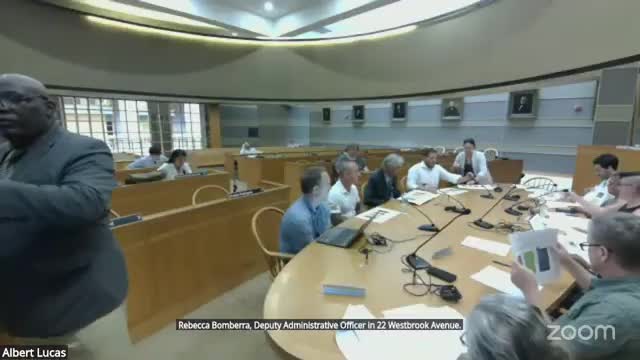
Summary
City staff outlined a proposed ordinance to let property owners petition for upgrades to unaccepted streets, including engineering review, a special-assessment process and potential liens on property. Committee members and residents pressed for clearer rules on voter definition, cost estimates and liabilities; no committee vote was taken.
City staff presented a proposed ordinance to the Legislation Committee that would let property owners petition the city to make improvements on so-called "unaccepted" streets and levy special assessments to pay for work. The proposal would require an engineering review, a formal petition routed to the board of alders, and a committee hearing that could recommend a special assessment recorded as a lien on properties.
The proposal matters because city staff said it would apply to "in excess of 50 unaccepted streets," many of which lack standard public-right-of-way features. City staff said the process is intended to let neighbors request paving, drainage and other work rather than relying on ad hoc repairs.
City staff described the stepwise process: property owners raise a concern; engineering evaluates the street and recommends whether infrastructure updates are warranted; public works prepares an estimate for either a standalone job or inclusion in the city's annual paving contract; staff prepares a petition for circulation; and a committee hearing would consider proposed improvements, alternatives, public-safety impacts, expected duration, and estimated value. "The estimate would then be prepared for work done in conjunction with the city's annual paving project or as a separate standalone project," a city staff member said during the presentation.
Committee members pressed for specifics on how votes would be counted on petitions. Several alderpersons and staff noted the ordinance text leaves ambiguous whether a majority should be measured by number of parcels, number of owners, or unit counts in multi-owner properties. "Housing unit counts as 1," a city staff member said as an initial assumption, but the committee agreed the draft needs language tying the voting rule to existing special-service or historic-district definitions.
Members asked how assessments would be collected and described the likely mechanics. A city staff member compared the assessment to other special-assessment mechanisms: "It's an assessment. It's collected by the city much like taxes are. It's leaned against the property." Staff said assessments would be recorded so unpaid balances would be settled at property transfer or could be collected through a lien process.
Engineers described the standards and scope of likely improvements, saying the city would generally tailor upgrades to the character of each unaccepted street rather than bring every alley to a full city-street cross section. The staff explanation included common design targets — roughly a 50-foot right-of-way where feasible, about 30 feet of roadway between curves for a full layout, and a goal of a 20-year service life for pavement on unaccepted streets. Staff contrasted typical pavement thicknesses: "a local road has a 4-inch thick asphalt; a collector is 9 inches," and said unaccepted streets would receive pavement adequate for their existing use. Drainage and curbing would be considered case by case; staff said adding full drainage systems would substantially raise costs.
Committee members and staff discussed cost uncertainty and cost-sharing. Staff said the board could determine a "proportional and reasonable" share of costs and that engineering estimates can change once work starts because of underground conditions or utilities. The staff also noted a potential 30–40% cost savings when work is bundled into the city's larger paving contract versus quoting a standalone job.
Speakers at the public comment portion urged the committee to move forward while also calling for clearer language in the ordinance. David Halberon, who identified himself as coordinator for residents of Hunter Place, said about 18 households rely on an unaccepted street for daily vehicle access and told the committee "we are looking for something from the city to help us do that process. This ordinance, with its flaws ... would be a great step to help us do that."
No committee vote was taken on the ordinance at this meeting. The committee kept the public record open for item discussion and asked staff and alder sponsors to return with proposed amendments clarifying voter definitions, assessment timing and liability questions. Next steps include drafting revisions and returning the item to committee for further review.