Get Full Government Meeting Transcripts, Videos, & Alerts Forever!
Get email alerts on the Education Staffing Recruitment topic
No spam. Unsubscribe anytime.
New Haven schools report fewer vacancies than last year but stress retention and ‘grow‑your‑own’ recruitment
Summary
New Haven Public Schools staff told the Board of Alders' Education Committee they reduced start‑of‑year vacancies compared with 2024, reported targeted gains in hard‑to‑fill subjects and outlined recruitment and retention measures including partnerships with local universities, paraprofessional pathways and a new mentorship/retention campaign.
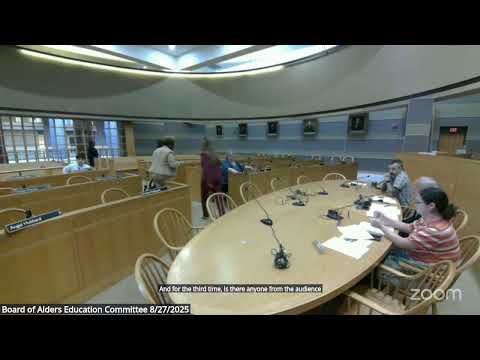
New Haven Public Schools officials told the Board of Alders' Education Committee on Aug. 27 that the district began the 2025‑26 school year with fewer vacancies than at the same point last year but remains focused on retention and recruiting for hard‑to‑fill subject areas.
A district presenter, joined by Lisa Flagler, director of human services and labor relations, and Relyna Booker, coordinator of recruitment and retention, gave a snapshot of vacancies and described initiatives to recruit and retain staff. The presenters said the district started the prior school year with 198 vacancies and began the current school year with about 156 vacancies; classroom teacher vacancies dropped from 77 to 50, while non‑classroom teacher vacancies fell from 19 to 9. Paraeducator openings were reported at 35 this year, down from 45 the prior year. The presenters noted a small increase in noninstructional vacancies (60 this year versus 54 last year) and attributed some of those to newly added positions and to civil‑service hiring processes that lengthen fill times.
District officials emphasized several contributing factors to staffing change. They said a rightsizing process earlier in the spring eliminated 77 positions to align staffing with enrollment and contract formulas; in addition, a number of long‑service employees retired after changes to city medical benefit terms that made retirement more financially attractive. Officials said resignations remain significant but are lower than at the same point the previous year.
The presentation highlighted progress in priority shortage areas. Science vacancies fell from 16 to 4 and math vacancies were reduced from 10 to none at the start of the year; special education openings fell from 16 to 11. Officials attributed some gains to targeted recruitment partnerships and incentives while noting statewide demand and competing offers in other districts remain persistent challenges.
Recruitment and retention initiatives described to the committee include: - Attendance at college and job fairs (UConn, Central Connecticut State University, Southern Connecticut State University, Albertus Magnus and others) and outreach to historically Black colleges and universities; - Partnerships and pathways such as Teach For America members and teacher residency programs, a Yale teacher fellowship that includes a three‑year service expectation, and a Connecticut teacher residency pipeline that has produced several hires; - ‘Grow‑your‑own’ pathways including paraprofessional training at the adult education site with vouchers for assessments; six participants from that program had been onboarded as paraprofessionals; - A new mentorship program pairing veteran teachers with early‑career teachers (years 1–3) and a revamped district retention committee to include union representatives and other stakeholders; - Expanded HR “office hours” for staff questions and an upcoming communications campaign to highlight positive district stories.
Committee members asked about how rightsizing and staffing formulas are applied. The presenters explained that elementary staffing follows contractual class‑size formulas by grade; high‑school staffing considers programmatic and graduation‑requirement needs by department. Officials said they try to ensure certified adults are in front of students on the first day of school even when a permanent hire remains pending, using long‑term certified substitutes or other temporary coverage where needed.
Members also asked about civil‑service processes, coaching positions and the scale of retention problems. The presenters said some noninstructional posts take longer to fill because of civil‑service testing and ranking requirements. They said instructional coaches were deliberately retained because coaches support teacher effectiveness and, officials argued, removing those positions to convert them to classroom roles would reduce systemwide instructional capacity.
Officials described state flexibility that has eased certification bottlenecks, including temporary permits and expanded reciprocity for out‑of‑state certificates; they said some programs include service commitments, noting the Yale fellowship requires three years of service to the district. Presenters also said the district collects exit interviews, though participation is limited (about 20% of departing staff in the last cycle completed the survey), and that the results show a variety of reasons for leaving, including pay, hours and proximity to home.
The workshop closed without a vote on district staffing policy; the committee discharged the workshop item to the full Board of Alders for consideration at an upcoming board meeting.