Get Full Government Meeting Transcripts, Videos, & Alerts Forever!
Get email alerts on the Tax Relief Hardship Cases topic
No spam. Unsubscribe anytime.
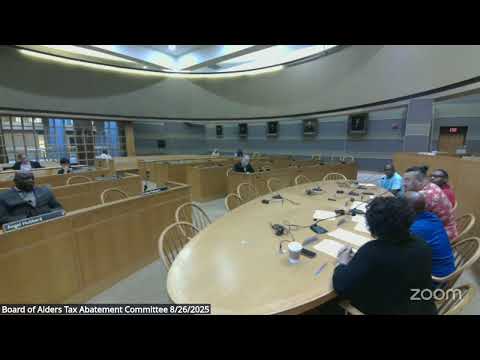
Committee approves reductions and temporary delays for multiple vehicle tax hardship cases
Summary
At a public meeting the New Haven tax committee heard several residents' hardship appeals over unpaid vehicle taxes and approved interest waivers and reduced balances or payment delays in multiple cases, including a decision to reduce one account to $593.84 with 90 days to pay.
The New Haven Tax Abatement Committee reviewed several public hardship appeals from residents about unpaid vehicle and related property taxes and approved relief measures in more than one case. Johnny Jackson, who identified himself as a veteran on disability, asked the committee to forgive three years of unpaid taxes for a vehicle he needs to register. The committee agreed to waive interest and reduce the balance for his account to $593.84, giving 90 days to pay the reduced amount.
Jackson said he had been out of work after an accident, was on disability and a veteran, and had difficulty paying because of medical issues. "I was in an accident... I'm on disability," Jackson said. Committee members examined his income statements and vehicle status and discussed whether the office could allow deferred payments. The chair told Jackson the tax office cannot accept a monthly installment schedule; instead, the office offered a 90-day period to pay the lump-sum reduced balance.
The committee also reviewed a case presented by a speaker who said a relative had died without a will and left a vehicle with unpaid taxes; the presenter described probate proceedings and medical hardships that complicated payment. In another case, Khadija Abe Mohammed explained that she lost a 2002 Ford Expedition during the pandemic and later traded it in, but a tax balance remained; she reported current employment at $19 per hour and asked for relief. Committee members negotiated reductions and offered a 30- to 90-day window in at least one case; one outcome recorded was reducing a balance to $922.36 for an appellant, with committee approval to waive interest and provide time to resolve final payment details.
Committee members took voice votes to approve the reductions and delays; where staff could confirm a payment had already been mailed, the committee instructed staff to credit that payment and, in one case, to waive interest pending confirmation. Committee members emphasized that the relief represented case-by-case hardship determinations and does not constitute a policy change for broader payment obligations.
Decisions recorded in the meeting included an approved reduction and 90-day payment period for Johnny Jackson and additional account reductions and interest waivers for other appellants pending administrative confirmation. The committee directed tax office staff to follow up with appellants and confirm payments before finalizing interest waivers where appropriate.