
Dona Ana planning panel conditionally approves 6-foot rock wall along busy Taylor Road
Get AI-powered insights, summaries, and transcripts
Subscribe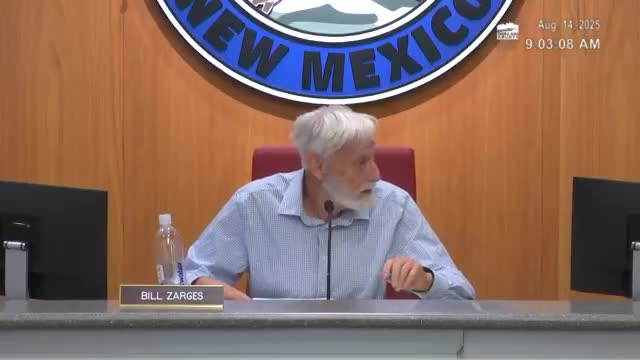
Summary
The Planning and Zoning Commission approved a variance allowing a 6-foot rock wall along Taylor Road at 504 West Taylor Road, provided the upper portion is transparent to preserve required clear sight triangles; neighbors urged the county to address high speeds on Taylor Road during public comment.
The Dona Ana County Planning and Zoning Commission on Aug. 14 conditionally approved a variance allowing a property owner to build a 6-foot rock wall along Taylor Road, with the condition that the portion of the wall above the county’s clear sight triangle be transparent and that the owner work with county staff to meet sight-triangle requirements.
Staff told the commission the subject parcel is a three-acre residential lot in a D1 (low-density residential) zone at the intersection of Taylor Road (County Road 243) and Mervs Lane, and that the applicant seeks permission to replace and raise an existing 4-foot wall to 6 feet after a vehicle crashed into and damaged the prior wall. The application was filed as case B25006.
The condition imposed by the commission requires the owner to maintain the county clear sight triangle at driveways and intersections; any extra height above the allowed sight-triangle zone must be transparent so drivers using the road can see approaching vehicles and pedestrians. Commissioners framed the conditional approval as a safety measure balancing the owner’s security concerns with neighbors’ concerns about visibility.
During the hearing, staff explained the applicable sight-triangle dimensions: Taylor Road is classified as a county-maintained minor arterial with a 40-foot right-of-way and a 35 mph design speed, producing a 40-foot horizontal sight distance and a 20-foot vertical dimension along the adjoining private road. Staff emphasized that “nothing over 3 feet in height measured from the street at the lowest edge of the pavement shall be permitted to obstruct a sight line,” and that the requested 6-foot height implicates those sight-triangle rules.
Multiple neighbors described repeated high-speed traffic on Taylor Road. Resident Robert Geggos told the commission, “We’re talking anywhere from cars going to 60 to 80 miles an hour.” Longtime neighbor Tony Montano said he had vehicles go through his yard and that the stretch had become what he called “a drag strip.” Bridal Moreno, whose 12-year-old son waits for the bus nearby, said she has made calls to the sheriff’s office and the school board asking to change the bus stop location.
The applicant and neighbors discussed alternatives during the meeting, including pulling the wall back five feet (which would allow a higher wall within setbacks), reducing the number of driveways to one, tapering the wall at driveway approaches, or using transparent materials for the top portion of the wall. County staff and a staff commenter suggested mixing solid lower wall construction with transparent upper panels or using bollards/columns embedded in the wall to provide crash resistance while preserving sight lines.
Commissioners debated whether to table the item so the applicant could work with staff and engineers on a redesign. Commissioner Zurniak moved to approve the variance conditioned on transparency above the sight-triangle height and working with staff; the motion was seconded and passed unanimously. The commission directed the applicant to coordinate final design and measurements with Community Development staff to ensure the required clear sight triangles at both driveways are met.
Staff noted that if the applicant does not accept the conditional approval requiring transparency, the property owner must reduce the wall to the 4-foot height permitted by the D1 zone. The commission and staff also discussed that enforcement of speeding and other traffic-calming measures (speed bumps, sheriff enforcement) is outside the planning commission’s authority and would require coordination with county roads and law enforcement.
The conditional approval ends this phase of the variance process; the applicant must finalize wall design with staff and obtain any necessary permits before further construction.