Get Full Government Meeting Transcripts, Videos, & Alerts Forever!
Get email alerts on the Comprehensive Plan topic
No spam. Unsubscribe anytime.
County drafts health-and-human-services chapter for comprehensive plan; staff ask committee for review
Summary
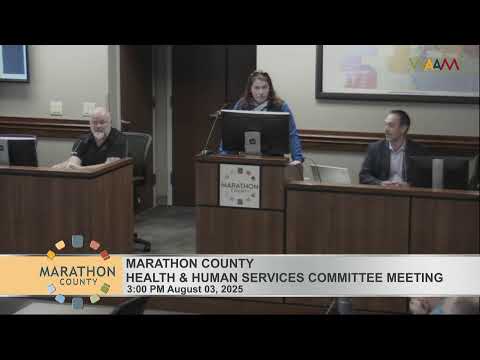
County planning staff presented a working draft of Chapter 3 (Health and Human Services) of the Marathon County comprehensive plan, noted the chapter is not statutorily required, and asked committee members to review issues and objectives including funding sustainability, workforce, mental-health access and youth substance concerns.
County planning staff presented a working draft of Chapter 3, the health-and-human-services element, for Marathon County’s comprehensive plan and asked the Health and Human Services Committee to review issues and objectives. Staff emphasized the chapter was added voluntarily — the state statute does not require a health-and-human-services element among the nine mandatory elements — and that other documents such as the county’s pulse and life reports provide deeper programmatic detail.
Staff said the draft updates study references and data drawn from the county’s pulse reports and that graphics will be added to the working draft. They noted remaining edits are needed, including more material on Family Keys and fall-prevention efforts, and explained that homelessness and housing topics are captured in Chapter 4 rather than Chapter 3.
The draft’s issue list highlights long-term sustainable funding for health and human services, workforce development and capacity, gaps in mental-health access and rising youth depression and anxiety. Other concerns include declining vaccination rates, dental-care access (nearly one-third of residents had not visited a dentist in the past year per cited data), and emerging problems tied to derived psychoactive cannabis products and their youth access. Staff also referenced the county’s recently completed opioid gap analysis and said next steps for implementation require funding and policy discussion.
Committee members suggested the draft avoid framing county government as solely responsible for outcomes and recommended more specific language about the county’s role in partnerships and program implementation. Staff said they revised goals and objectives language to clarify the county’s implementation role and asked members to send edits by email or bring them to the next committee meeting.