
Staff recommends new permit categories and fees to improve tracking, enforcement and transparency
Get AI-powered insights, summaries, and transcripts
Subscribe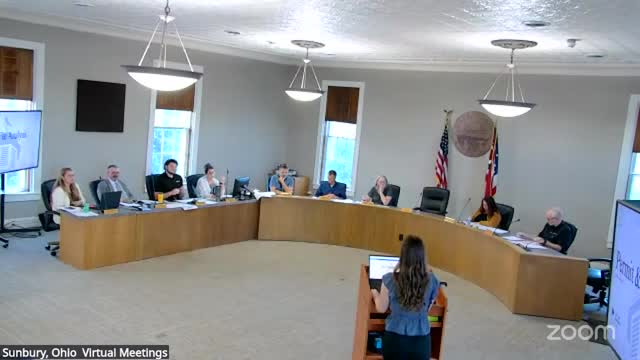
Summary
An intern-led analysis recommended separating common permit types (pools, fences, decks), adding application and inspection fees, mid-range fee schedule, contractor registration, and application guides; staff will draft an amendment to the building and zoning fee schedule for commission input and later council review.
City staff outlined a permit‑fee analysis and recommended changes intended to create clearer permit categories, generate modest revenue, and strengthen compliance.
Alexia Gerber, who led the analysis, said the city currently issues a catch‑all “residential zoning certificate” that covers decks, fences, accessory structures and other work. She recommended separate permits for frequently issued items (pools, fences, decks), a flat application fee, a mid‑range fee schedule that balances staff time and resident affordability, and more detailed documentation requirements for applications. Gerber also proposed application guides, contractor registration and homeowner affidavits, and potential future features such as size/value‑based fees and combined project applications in the city’s OpenGov permitting software.
Gerber presented a revenue estimate based on permits issued over recent years: implementing the proposed fee structure could have produced roughly $18,000 on the low end to $60,000 on the high end over the period reviewed. She emphasized that the immediate goal is structure and transparency rather than revenue alone and said detailed application guides should make the process easier for residents.
Planning staff told the commission that they will begin drafting an amendment to the city’s building and zoning fee section and asked the commission to provide input on permit categories and proposed fees before the package goes to council. Commissioners and members of the public discussed affordability for existing residents versus larger developers, phased implementation to minimize disruption, and administrative details such as using generic city emails on guides and including definitions (e.g., square feet / sf) on forms.
No fee schedule was adopted at the meeting; staff will return with proposed ordinance amendments and materials for commission review.