
Residents and tenants urge Dayton to fund housing trust, rental registry and repairs as staff details encampment removal
Get AI-powered insights, summaries, and transcripts
Subscribe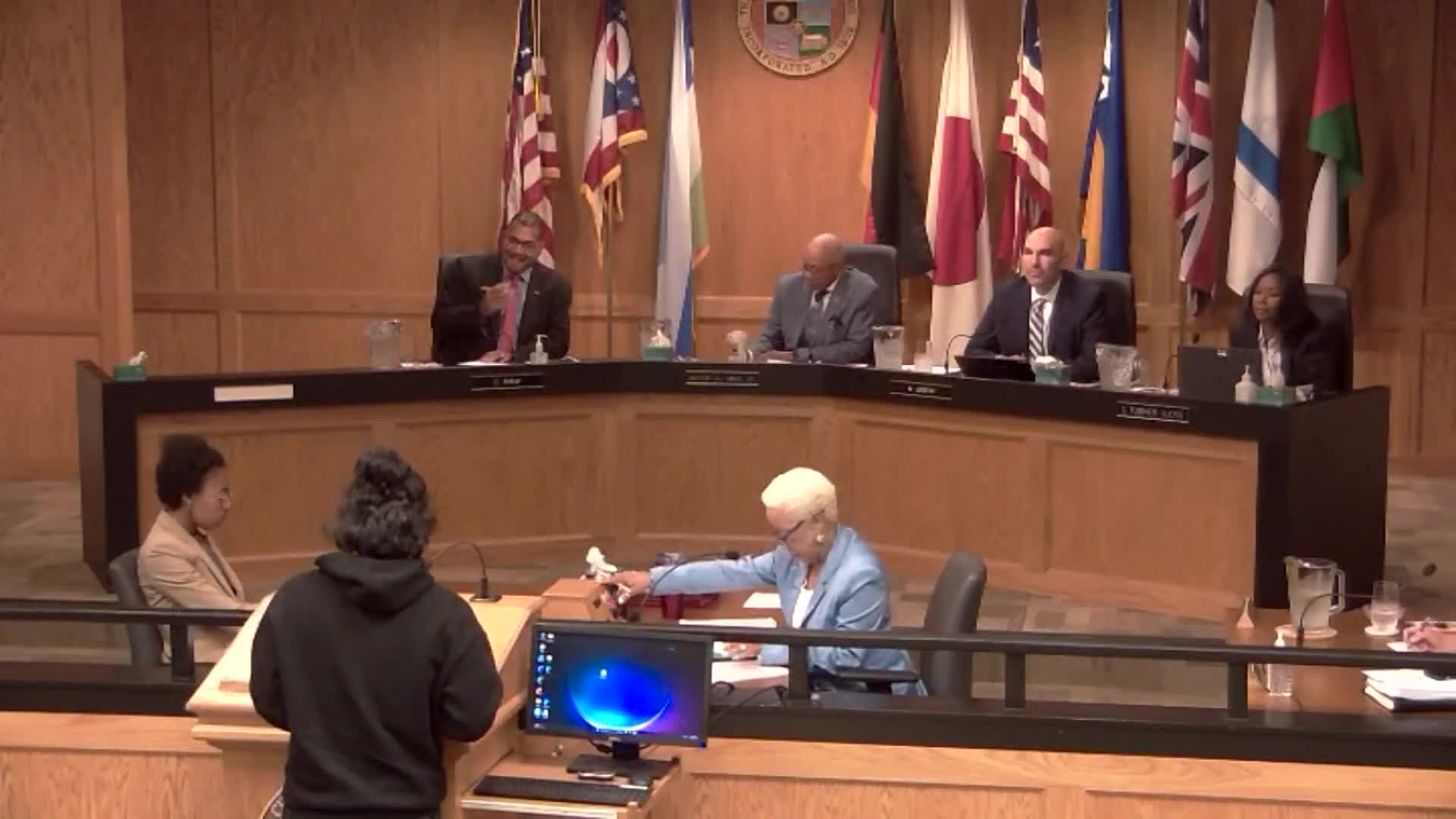
Summary
At a city commission meeting, residents and Dayton Tenants Union speakers urged creation of a well‑funded housing trust fund, rental registry, inspection and right‑to‑counsel programs; city staff described outreach and notices preceding a McIntosh Park encampment removal earlier that week.
Dozens of residents and advocates told the Dayton City Commission on Aug. 6 that the city should dedicate sustained funding to a housing trust fund, create a rental registry and inspection program, and fund home‑repair assistance to improve housing conditions and prevent evictions.
“Poor housing conditions are directly tied to Dayton's crisis of infant mortality,” Cheyenne Myrick, who identified herself at the podium, told commissioners. Myrick urged the commission to allocate “meaningful dollars into the housing trust fund” for repairs, inspection and tenant supports.
Speakers representing Dayton Tenants Union and other residents described recurring problems including mold, infestations, lack of heat, and landlords not making timely repairs. Ray Elson and other speakers pointed to Centerville’s rental inspection program as a local model; Elson said Centerville inspects all rental properties every two years and cited the program’s goal of preserving housing standards.
Destiny Brown, who provided data about an existing right‑to‑counsel pilot, told the commission the pilot’s clients have larger households and that many served are working families with children. Brown said, “81% of the clients have multiple children in the household,” and cited a Stout evaluation from Columbus projecting benefits and cost savings from legal representation for tenants.
Several young speakers — identified by staff as students — and residents asked the commission to invest in blight removal, refurbishment of vacant houses and shelter capacity. Multiple public commenters requested that the housing trust fund include emergency rental assistance, repair grants and legal help for tenants facing eviction.
Separately, city staff provided a chronological briefing on the McIntosh Park encampment and its removal earlier in the week. “Our mobile crisis response team… first made contact with the occupants in the encampment in McIntosh Park on July 15,” said Miss Dixing, a city staff member. She said formal notice to vacate was issued on July 25 with an advised departure deadline of Aug. 4; staff made continued outreach on Aug. 5 and final contact on the morning of Aug. 6 before the removal.
Cathy Rowe, who said she had photographed the scene, told the commission she saw people with disabilities and a 79‑year‑old who had little time to pack belongings and urged better coordination and advance notice when encampments are cleared. Miss Dixing said staff worked with outreach partners, gave occupants time to remove items, and noted that the city’s parks are posted to prohibit overnight sleeping.
Commissioners thanked speakers and asked staff to provide follow‑up information. Commissioner Turner Slauson asked whether the city could more publicly post notices and checklists for encampment outreach so partners know what steps were taken and to increase coordination with social‑service providers. Commissioners and staff agreed to continue conversations with Dayton Tenants Union, health and social services partners, and neighborhood groups.
No new funding decisions were made at the meeting; advocates asked the commission to consider a comprehensive package — including a housing trust fund with allocations for repairs, rental assistance, proactive inspections and right‑to‑counsel legal services — and to return with implementation details.