
Commission approves $652,000 in federal ESG grants for homelessness programs, including Gateway men’s shelter maintenance
Get AI-powered insights, summaries, and transcripts
Subscribe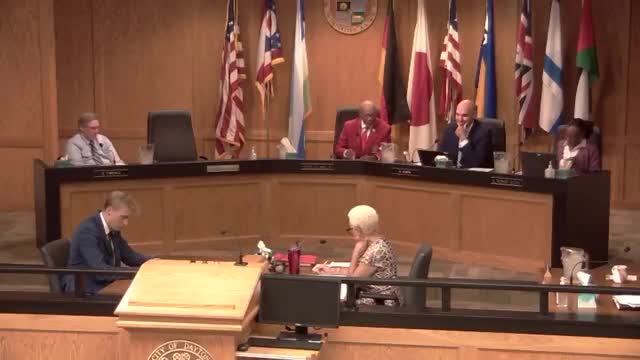
Summary
Dayton commissioners approved city manager recommendations to accept $652,000 in Emergency Solutions Grant funding for HomeFull programs: school-based eviction prevention, rapid rehousing and maintenance at the Gateway men’s shelter; staff said a county evaluation of the homelessness system is under way and will inform next steps.
The Dayton City Commission on Aug. 14 approved the city manager’s recommendations to accept $652,000 in U.S. Emergency Solutions Grant (ESG) funding for homelessness-prevention contracts with HomeFull, including school-based eviction prevention, a rapid-rehousing program and maintenance and operation funding for the Gateway men’s shelter.
The grants were presented at the commission meeting by a city staff member who said the three service agreements together total $652,000 and come from federal ESG funding. “Item number 3 is a grant agreement with HomeFull that targets in school based prevention and eviction prevention, including legal assistance for high at risk households living in subsidized public housing,” the staff member said. The staff member also said the city has supported similar work for about 10 years and that “last year, we served 40 households with our funding.”
The nut of the matter, the staff member said, is that the awards are intended to prevent eviction and to help people move from homelessness into housing. Item 4 was described as an ESG-funded rapid-rehousing contract that served about 100 households last year; item 5 covers maintenance and operations at the Gateway men’s shelter, which the staff member said serves “200 to 300” men per night.
Commissioner Charles Lause pressed staff for information about what happens to people after they leave rapid rehousing. “What we are experiencing is that those who go through the program temporary housing and assistance, they are then back into the system,” Lause said, asking for follow-up on how the city and partners can reduce returns to homelessness.
A city staff member said the county is conducting an evaluation of the homelessness-prevention system and that staff recently spoke with county staff member Jerry Begeese about gaps and next steps. “After this evaluation, there’ll be opportunities for us to look at our system and try and figure out where gaps are, where folks are experiencing gaps or where we need to, for instance, bring on further inventory in permanent supportive housing,” the staff member said.
Commissioners also raised concerns about landlords who accept rapid-rehousing tenants for 12 to 18 months and then evict them when rents rise. Lause said that pattern can force people back into the shelter system; the staff member said system changes identified through the county evaluation could address those gaps.
Lause also asked about past American Rescue Plan Act (ARPA) funding tied to shelter improvements. A city staff member responded, “The ARPA funding was used primarily to help with the operations during COVID,” and added that the city has made capital and operational improvements to shelter facilities over the past 15 years; the staff member offered to provide a detailed memo on ARPA expenditures.
Action: At the meeting the commission moved and seconded to approve the city manager’s recommendations; the motion carried on a voice vote. The staff member said they will provide additional detail on prior ARPA spending and that the county evaluation will inform any system changes.
Why it matters: The ESG awards and shelter maintenance funding support both immediate shelter operations and eviction-prevention services that city officials said aim to reduce returns to homelessness. Commissioners sought clarity on long-term outcomes, landlord behavior after rapid rehousing, and how ARPA and other funds have been used to maintain shelter capacity.
Next steps: Staff committed to a follow-up memo with details on ARPA expenditures and to coordinate with the county evaluation to identify system gaps and potential strategies for reducing returns to homelessness.