
Council reviews option to add 1% lodging visitor tax; county rate limits city to 1% currently
Get AI-powered insights, summaries, and transcripts
Subscribe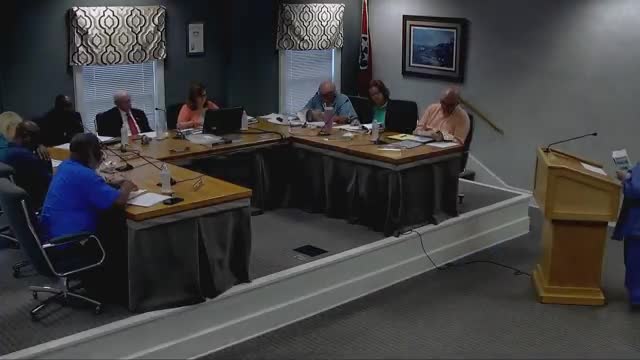
Summary
Lewisburg leaders received a briefing on potentially adding a municipal lodging (hotel/motel) visitor tax that state law would let municipalities stack with existing county rates; under current local and state rules the city could add about 1%.
Lewisburg officials heard a presentation on the possible adoption of a local hotel/motel visitor tax that would apply to lodging customers and be collected by lodging platforms and operators. Jennifer Pearson, Director of Economic Development, introduced Ryan French, executive director and CEO of the South Central Tennessee Tourism Association, who presented the proposal and answered questions. French emphasized the tax is a visitor-paid occupancy tax, not a direct tax on residents or hoteliers: “We would never come here and advocate for taxation that's going to go on to the citizens,” he said, calling it a pass-through collected from visitors. French reviewed county-level collections and state law changes. He said Marshall County currently collects a 7% lodging tax and that recent Tennessee legislation has made stacking municipal lodging taxes possible but also set an 8% statewide cap on combined local lodging taxes; because Marshall County has a 7% private-act rate, the city currently could add only 1% under existing law. French estimated a 1% levy for Lewisburg would generate roughly $15,000 per year based on projected lodging activity in 2025–26 and noted Airbnb/VRBO already collect and remit local lodging taxes to the county. Council members asked how collections work for short-term rentals, whether the 1% would be automatically collected by platforms, and whether the city should first consult local hoteliers. French said short-term rental platforms would collect any newly enacted local rate and remit it through the state distribution system; for platforms not automatically remitting, the city would notify property owners and hosts to remit monthly. He also noted legislative changes remain fluid and the city’s ability to increase the tax beyond 1% could change with future state action. Council asked staff to contact local hoteliers for input and to provide a sample ordinance or resolution for the council to consider. Staff said they would provide the model resolution and follow up with hoteliers; council members discussed placing a resolution or ordinance on the regular-meeting agenda for final action.