
Council opens budget process; staff warns of property-tax changes and final chance for levy-growth appeal
Get AI-powered insights, summaries, and transcripts
Subscribe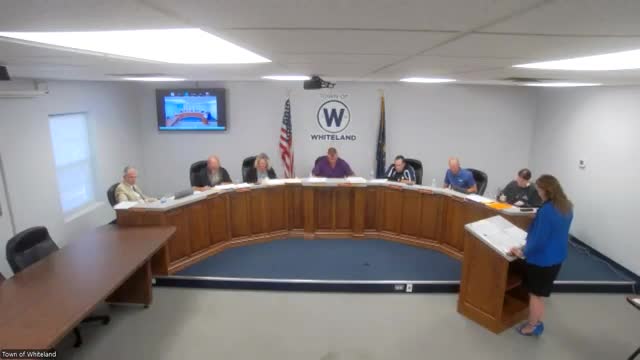
Summary
Town staff presented the budget introduction and a detailed briefing on state changes to property-tax law (Senate Bill 1), the town’s rapid assessed-value growth, and the town’s opportunity to file a final levy-growth appeal before a statutory change removes that tool.
The Whiteland Town Council opened the 2026 budget process and heard an extended presentation from town staff and the town’s financial advisor about recent state-level changes to property-tax rules and the choices the town faces entering the budget cycle.
Town staff opened the agenda item as an introduction to proposed 2026 appropriations and noted the town’s large year-over-year assessed-value increase (presented in the meeting as “about 34–38%,” and as a cumulative increase since 2017 of “over 200%”). Staff described the item tonight as an introduction and said formal adoption would follow the state timeline; the council held a public hearing and did not adopt the ordinance at the meeting.
Adam Stone, the town’s fiscal advisor, walked the council through how Indiana’s levy and tax-rate system works, explained why rapid assessed-value growth typically causes a tax-rate drop unless a municipality takes specific steps, and described the town’s options for maintaining services and tax-rate stability.
Key fiscal points presented (as stated during the meeting): the town has one final year under current state law to petition the Department of Local Government Finance (DLGF) for a levy-growth appeal; staff said the statutory tool is being removed after this budget cycle. Stone identified the potential petitionable amount for the town at roughly $150,000 and $25,113 for the fire levy (numbers presented during the briefing). He also flagged two near-term, material impacts from the state changes discussed during the meeting: a new homestead credit estimated in staff materials at about $218,000 in FY2026 and the potential loss of local income tax (EDIT/ceded LIT) revenue as currently configured — an item staff said could amount to roughly $1 million in long-run loss unless the county or town adopts replacement options.
Why it matters: Staff said the state changes will push more of the tax-burden adjustments to municipalities and could raise long-term tax rates as new deductions phase in; the loss of locally controlled income-tax revenue is the single largest fiscal risk identified in the presentation.
Procedural notes and next steps: The council opened and closed the public hearing on the proposed budget ordinance (identified in the packet as Ordinance 2025-12) and was briefed on the timetable for adoption. Staff said the petition to the DLGF for a levy-growth appeal must be filed by Oct. 21 if the town chooses to pursue it; the meeting packet also identified an adoption deadline in early November for the formal budget ordinance. Staff and the advisor requested direction from the council about whether to prepare an application package for a levy-growth appeal; council members said they would return to the item for further consideration and indicated staff would prepare the formal application materials and present them for council action.
Quotes and context: During the briefing, Stone explained the levy mechanism as a statewide control on how fast property-tax revenue can grow and urged the council to consider recurring operational expenses (for example, fire staffing, parks, or streets) when preparing any appeal application, because DLGF reviewers focus on persistent operating needs rather than one-time capital items.
Ending: Council members did not vote to adopt the budget ordinance at the meeting; staff will supply the formal application materials and recommended levy positions for the council to consider at upcoming meetings.