Get Full Government Meeting Transcripts, Videos, & Alerts Forever!
Get email alerts on the Active Transportation topic
No spam. Unsubscribe anytime.
Residents present Gurney-to-park pedestrian path; committee nominee confirmed
Summary
A resident-led committee presented a proposed 5-foot asphalt path from Gurney to the park, backed by a grant the presenters said covers 80% of construction; council confirmed John Wall as an official member and scheduled follow-up work sessions to refine costs, align engineering and easements.
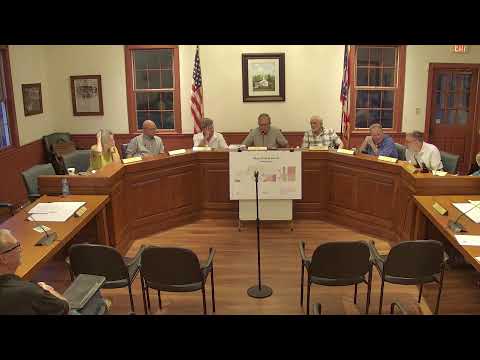
John Wall, acting co-chair of the Safe Bicycle and Pedestrian Transportation Committee, presented a plan at the Village of South Russell council meeting on Aug. 11 for a five-foot asphalt path to connect Gurney to the village park and nearby neighborhoods. “We have up to $300,000 in this grant that has already been awarded,” Wall said, and the committee estimated the grant would cover roughly 80% of construction costs.
The plan described as “phase 1” would run on the north side of Bell Road, include two additional crosswalks near Maple Springs and the park and a segment through the park to connect to an existing crossing. The committee circulated a preliminary cost estimate from engineering consultant Verdantas that extended the project beyond the basic segment; the larger extended plan was quoted at $676,000, with presenters saying the core Gurney‑to‑park phase could be reduced to about $538,000 by omitting optional boardwalks and added signal work. At 20% local match, presenters calculated the village’s share for the basic phase at about $107,600.
Village engineer Eric Dunn raised engineering caveats during the presentation and called attention to stormwater, underground utilities and grade changes. “My concern would be stormwater,” Dunn said, noting that sections of Bell Road have concentrated runoff and that the path could require storm sewer piping, manhole adjustments and other infrastructure work depending on final alignment. Dunn also said that utility companies typically accept asphalt path surfaces because they can still excavate for emergency repairs, but that surface structures such as cleanouts and catch basins could constrain grade changes.
Rich Washington, the engineering representative working with the committee, has been coordinating the preliminary layouts, Wall said. Committee material circulated at the meeting listed two proposed boardwalks (originally estimated at $180,000 total, later presented as $90,000 for one boardwalk after the committee reduced scope) and crosswalk signalization estimates that varied in the documents and during remarks ($18,000–$32,000 reported in different places during the discussion).
Councilmembers and staff discussed schedule and next steps. The committee requested a joint working session to review plans with staff and the solicitor; the group tentatively scheduled a working session for Aug. 25 (an event notice in the meeting referenced Aug. 26 and the week of Aug. 20 for follow-ups). Council and finance staff noted that many grant programs operate on a reimbursement model: the village would pay contractor invoices and then request reimbursement, and the village’s ability to carry upfront costs remains a budgeting question.
During the meeting Mayor and council moved to confirm John Wall as an official member of the Safe Bicycle and Pedestrian Transportation Committee. Councilman Chris Bell made the motion; the motion was seconded and approved by voice vote.
The presentation included community outreach details: the committee said it surveyed residents (the committee presented “about 350 households responded,” which was described as roughly 25% of households), held door knocks for households adjacent to the proposed path and planned additional public information at the farmers market. Committee leaders said they would continue to refine alignment, respond to engineering review on grading and utilities, and bring updated cost breakdowns to the village before any procurement or appropriation of funds.
No formal appropriation or contract award for the path was made at the meeting. Council and staff emphasized that the path’s final scope, final engineering work, right‑of‑way needs and any easement approvals would need documented designs and cost verification before the village would commit funds.