
NRGRDA begins master plan for Wolf Creek Park; county asked to guide mega-site investment
Get AI-powered insights, summaries, and transcripts
Subscribe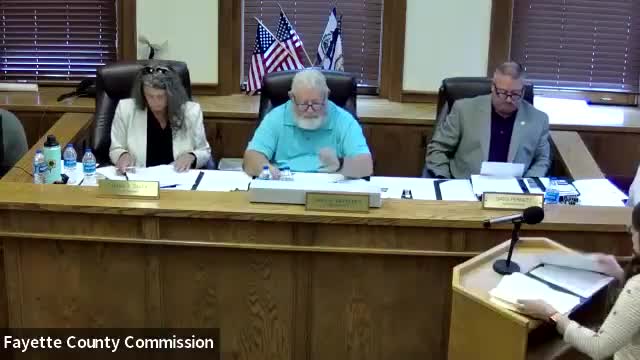
Summary
The New River Gorge Regional Development Authority told Fayette County commissioners on Sept. 3 that a nationally recognized team has started a 13‑week master planning process for Wolf Creek Park and presented two developable pad options behind the Ruby Welcome Center, asking the county to pick a priority pad so engineers can estimate grading, utilities and infrastructure costs.
The New River Gorge Regional Development Authority told the Fayette County Commission on Sept. 3 that a 13-week master planning process is underway for Wolf Creek Park and that the authority has completed a high-level site-readiness assessment for a large property behind the Ruby Welcome Center that it described as the county’s “mega site.”
NRGRDA Executive Director Jenna Belcher said EDSA — supported by subconsultants Kimley‑Horn, RCLCO and Progressive Trail Design — began stakeholder meetings the week of the commission meeting and will deliver a draft master plan and financial/feasibility scenarios before presenting a final plan the week of Nov. 3. Belcher said the county previously approved a $5,000 contribution to add a developer‑solicitation deliverable to the scope.
The master plan will identify developable acreage, conservation acreage, infrastructure and financing scenarios, Belcher said. She said prior work shows roughly 800 acres in Wolf Creek Park with about 130 acres regarded as developable; the remainder is candidate conservation acreage that the West Virginia land‑trust community and conservation fund have discussed acquiring.
Belcher also presented an engineering and topography assessment of property behind the Ruby Welcome Center, identifying two “low hanging fruit” options: a 45‑acre pad on the We Are Farmers tract that requires substantial earthmoving but lower utility extensions, and paired 20‑ and 24‑acre pads on Arrow property that are flatter (less grading) but will need more expensive utility work and road upgrades. The NRGRDA report estimated roughly 761,000 cubic yards of earthmoving for the 45‑acre pad and said that grading and utilities will determine whether the site is marketable without subsidy.
Belcher said the next step for the mega‑site work is to pick which pad to pursue so Thrasher (the engineering firm under contract) can scope detailed cost estimates for grading, utility extensions and road work. She said NRGRDA has not marketed the sites because neither is “site‑ready,” and that a year to 18 months is a reasonable horizon for making a pad ready depending on capital and earthwork costs.
Belcher said EDSA’s on‑site stakeholder schedule includes property owners, utility providers, municipalities (Fayetteville and Oak Hill), outdoor recreation and conservation groups, and that the consultant will hold a public open house the week of Oct. 13. She said EDSA will turn stakeholder input into an implementation strategy with financing options the commission can consider, including potential conservation fund purchases of undevelopable acreage to protect trails and natural assets while concentrating development on marketable pads.
Commissioners asked whether prior URA/engineering plans had been provided; Belcher said NRG RDA supplied EDSA with previous master plans, trail maps and mapping files and with Thrasher’s files to avoid duplication and to inform feasibility analysis.
Belcher said there is existing interest in a smaller, seven‑acre flat pad (across from DEP) but that no purchase agreements have been executed; she reiterated that NRGRDA will not market sites until they are made marketable through grading and utility work. She requested the commission’s input on which of the two primary pad options (45‑acre vs 20/24‑acre) the county would like NRGRDA and Thrasher to pursue in the next cost‑estimate phase.
The presentation concluded with a request that the commission, if it chooses to pursue one option, participate in capital‑stacking and infrastructure planning once cost estimates are available.