
Teachers, parents and students urge board to reverse or halt RIFs; public comment draws sharp criticism of process
Get AI-powered insights, summaries, and transcripts
Subscribe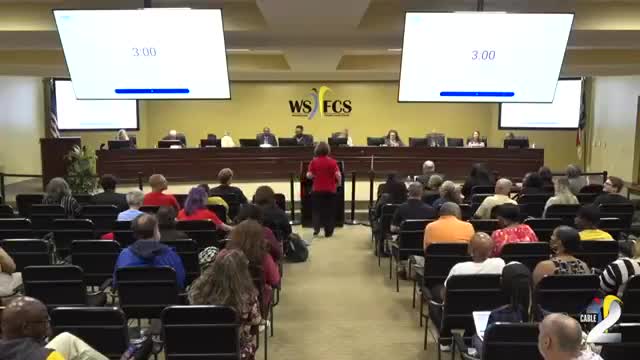
Summary
Dozens of teachers, parents and students told the Winston‑Salem/Forsyth County Schools board the district handled reductions in force poorly, citing short notice, harm to special education services and calls for different budget choices.
A long public‑comment period at the Winston‑Salem/Forsyth County Schools board meeting turned into a sustained outcry over recent reductions in force (RIFs), with teachers, parents and students telling the board the process was poorly managed and asking for alternatives to staff cuts. Multiple speakers urged the board to reconsider actions that they said would harm special education services, classroom stability and staff morale.
Stephanie Wallace, a 26‑year teacher and the district’s 2020 teacher of the year, told the board she had repeatedly comforted students and colleagues in recent days and said the district had shown “zero effort” to find creative ways to avoid the sudden losses. Parent and special‑education advocates described IEP and classroom disruptions, with several commenters saying students with disabilities would lose needed adults and continuity.
Multiple early‑career and alternatively licensed teachers — including Jackson Noden and Alexander Nolan — said they were being cut even though they chose classroom service and argued that removing newer teachers would hurt students. Speakers raised procedural concerns about timing: public commenters and parents cited a notification schedule discussed on Aug. 19 and said some staff learned their status over a holiday weekend or by email on Labor Day, amplifying stress.
Several speakers proposed alternatives. Des Bosamo, a science teacher at Hanes Magnet, asked board members to forgo their stipends to save one ECTA position; another speaker suggested across‑the‑board temporary reductions in leadership pay to preserve classroom posts. Others pushed for fund‑raising, grant writing and use of unspent ESSER or other grant dollars to cover staffing temporarily.
District staff later told the board that 222 staff were processed under the RIF protocol (down from earlier estimates) and that reconciliation of positions after the district’s 10‑day enrollment count led to some reductions and reassignment decisions. Commenters repeatedly said communication was inadequate, that expectations set by district leaders were not met and that the handling had damaged trust between schools and the central office.
Speakers included classroom teachers, school leaders, a 13‑year‑old student who said field‑trip limits felt unfair, and retired principals who said they returned to help schools and were dismayed by the cuts. Board members listened and several pledged to seek more information and to press for alternatives; no reversal of the RIF process was announced at the meeting.