
Council votes voice support for police chief’s call for greater offender accountability, limits motion to a single sentence
Get AI-powered insights, summaries, and transcripts
Subscribe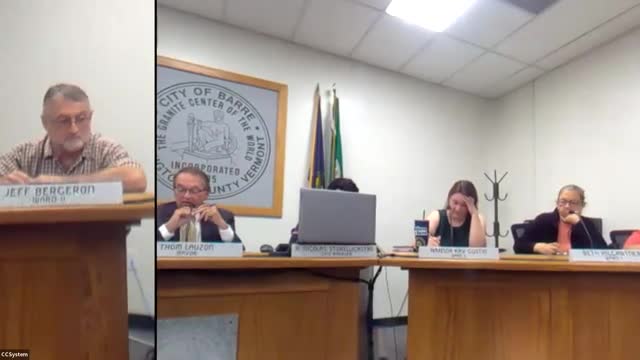
Summary
The Barrie City Council voted Sept. 9 to express voice support for one sentence from a police chief’s recent opinion post about offender accountability after an extended debate on social-media use and pending criminal matters.
The Barrie City Council voted by voice on Sept. 9 to express support for a single sentence from a recent opinion post authored by the city’s police chief, after an extended council discussion about public safety, the criminal-justice system and use of city social media.
What the council approved: the motion — moved and seconded and decided by a voice vote — limited the council’s support to the sentence read aloud at the meeting: “It is time, past time for the criminal justice system to hold offenders more accountable for their offenses.” The council did not adopt the chief’s entire post, and members clarified the vote was restricted to that sentence.
Why it was on the agenda: the city manager told the council that the chief had posted an opinion piece on social media about an active, pending case and the department’s concerns about repeat offenders and attacks on officers. The manager said he and the chief had discussed the post and that he had encouraged removal of a concluding clause that stated the views might not represent the city; the manager described the post as factually based and intended to inform the public about policing challenges.
Council debate: several councilors voiced support for the sentiment while others raised procedural and legal concerns. - Supporters said the statement reflected frustration among officers and residents and underscored the need for accountability. One councilor said the chief “is really speaking out about accountability” and that officers are “doing the hard work.” - Critics cautioned that the post discussed an active, pending case and that parts of the chief’s post could be seen as one-sided. Councillor Spalding and others said the council should avoid appearing to prejudge court proceedings and should be careful about city social-media use. One councilor said the council could vote to remove the post from city social media if it believed the posting was inappropriate. - Several councilors asked whether the council’s role should be limited to seeking practical remedies — for example, local nuisance-property enforcement, funding for public-safety initiatives, or advocacy to state legislators — rather than publicly endorsing prosecutorial decisions.
Administrative context: the city manager and the chief said they would consult with the state's attorney if any part of the post risked affecting a pending prosecution. Councilors repeatedly emphasized they were not discussing specific case facts in the meeting because of active proceedings; one councilor reported the state's attorney had warned against public discussion.
Outcome and next steps: the council’s voice vote approved the narrow-motion of support. Councilors asked staff to develop concrete avenues for addressing public-safety concerns locally, including exploring nuisance-property enforcement and possible uses of settlement or other funds for targeted interventions. No changes to prosecution, charging, or judicial decisions were made or suggested by vote; the council noted it lacks authority to change court outcomes.
Ending: council members agreed the city should continue structured conversations with the police department, the state’s attorney, and other stakeholders about concrete steps the city can take to reduce repeat offending and protect officers and residents.