Get Full Government Meeting Transcripts, Videos, & Alerts Forever!
Get email alerts on the Behavioral Health Recovery topic
No spam. Unsubscribe anytime.
Will County approves Second Story Ranch special-use permit for recovery-centered residential program on 68-acre Crete property
Summary
The Will County Land Use Committee approved a special-use permit allowing the Second Story Foundation to operate a recovery-centered residential program on a 68-acre former training ranch in Crete Township after staff and the Planning and Zoning Commission found the proposal similar and compatible to a rural retreat.
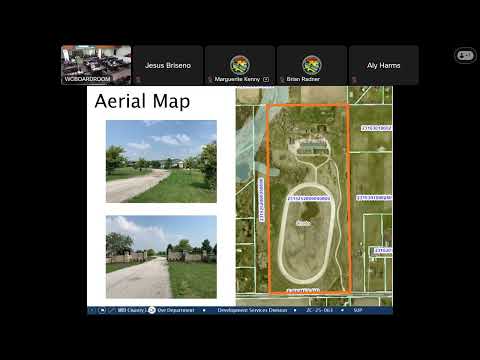
The Will County Land Use Committee on Sept. 4 approved a special-use permit to allow the Second Story Foundation to operate a recovery-centered residential program on a 68-acre property at 2400 Bemis Road in Crete Township. The committee voted 4–1 to approve the request after a lengthy public discussion and a unanimous 6–0 recommendation from the Planning and Zoning Commission with seven staff conditions. The permit allows the property, formerly the Double Dakota Ranch, to continue equine boarding and training while adding a 12,000-square-foot lodge and residential space for up to 15 program participants who would live on-site as part of an extended recovery program. Planning staff described the request as seeking permission for a use “similar or compatible to a rural retreat,” a permitted use in the A-1 agricultural district, rather than seeking rezoning to a residential district. The program’s representatives told the committee the facility would not operate as a halfway house. Nate Washburn, attorney with KGG LLC representing the applicant, said, “I want to be very clear, this is not a halfway house.” Jim O’Connor, who identified himself as a certified alcohol and drug counselor and executive director of Second Story, described a multi-step intake and screening process: prospective residents generally enter after a 28-day inpatient program, undergo phone and in-person screening, full background checks that screen out violent and sexual offenses and weapons-related offenses, and must demonstrate willingness and teachability. Committee members who supported the request emphasized the program’s potential to offer extended, hands-on recovery services tied to agricultural work. County Board member Judy O’Gala said the program provides “an area for people to come and have that support for 6 to 8 months and learn how to get along, learn how to do chores on the farm, work together as a team.” Several other board members described the site’s agricultural operations — including existing stables that can hold about 85 horses — and the applicant’s plans for on-site education, public programming and an organic garden. Opposition from nearby residents and Creek Township was noted in staff reports presented to the committee. Staff told the committee that Creek Township commented the proposed use could harm surrounding residents’ quality of life; neighbors at the Planning and Zoning hearing raised concerns about noise, safety, property taxes and environmental impacts. Planning staff also noted that the zoning code defines halfway houses as not permitted in the A-1 district and that the applicant’s argument rests on combining agricultural operations with an extended residential recovery program to qualify as similar and compatible to an A-1 rural retreat. Planning staff described the site plan as placing new structures within A-1 setbacks and said the applicant would need to meet all county building and health codes; staff also reported a unanimous Planning and Zoning Commission recommendation (6–0) for approval with seven conditions in the staff report. Jim O’Connor said the average participant stay would be about six to 18 months, that participants would work in horse care, land management, farming and hospitality, and that the foundation would partner with health providers for care coverage. On financing, O’Connor said the foundation’s ongoing operating funds are “mostly privately funded” and that capital funding for construction could come from government grants; he also said the group has engaged federal health officials about potential demonstration funding. The committee’s approval was recorded by roll call: Denise Winfrey, Judy O’Gala, Dawn Bullock and Herbert Brooks voted yes; Sherry Newquist voted no. The motion and any conditions attached to the county board’s approval were not read into the record in full during the committee session.