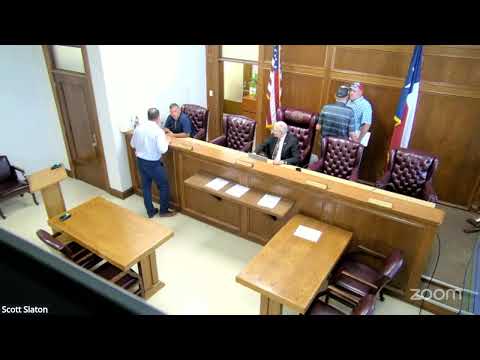
County faces $3.5 million budget shortfall; commissioners weigh cuts to new positions, vehicles and allocations to roads
Loading...
Summary
Presenters told the commissioners that requested FY‑26 spending totals about $23 million while projected revenues are roughly $19.07 million, leaving an estimated $3.5 million gap. Commissioners debated trimming new positions, deferring vehicle purchases, adjusting the road‑and‑bridge allocation and asking department heads to resubmit budgets.
The County Judge's budget presentation showed current department requests of about $23 million against projected revenues of roughly $19.07 million, producing an estimated $3.5 million deficit for the coming year. "That means we have a deficit in our budget of 3 and a half million dollars," the presenter said, urging the court to identify cuts or revenue changes to reach a balanced budget.
Why it matters: Commissioners said the gap would force service reductions or delayed capital spending if not closed. Staff described limited one‑time revenue options: a roughly $1 million FEMA disaster reimbursement is expected but not yet obligated, and certain departmental revenues (for example, the Fire Marshal fees) are restricted to special funds. The presenter noted that the county currently has zero contingency budgeted for FY‑26 and that the county must preserve an ending balance typically between $100,000 and $150,000.
Costs and options discussed: the presenter walked through major drivers of the increase: a previously adopted 5% pay raise and several new positions that added roughly $566,000 in salary and insurance costs; a countywide 3% raise adopted for FY‑26 represents roughly $378,000. Commissioners proposed several options to close the gap: reduce or stagger salary increases, eliminate most new positions requested for FY‑26, defer or repurpose vehicle purchases, reduce discretionary building and equipment projects, or reduce the percentage of the general fund allocated to road and bridge operations (the court currently uses a 25% allocation).
On new positions the court tentatively agreed (in discussion) to retain two hires it characterized as essential — an environmental/compliance officer for the Fire Marshal and a civil attorney for the district attorney — and to defer many other new hires until revenues support them. Commissioners also discussed converting or reallocating existing vehicles (for example, using sheriff surplus vehicles for the Fire Marshal) to avoid new vehicle purchases; the Fire Marshal's vehicle request of two vehicles (about $75,000) was identified as a potential save if a used vehicle transfer were possible. The sheriff's planned vehicle purchases were noted as a substantial line item (about a half‑million dollars) that could be deferred.
Roads and the special allocation: commissioners debated whether to reduce the percentage of general‑fund support directed to road and bridge. Staff showed that lowering the allocation from 25% to 24% would return about $190,000 to the general fund; 23% would free about $370,000; 22% about $569,000. Several commissioners resisted cuts to road funding, noting residents prioritize road maintenance and emergency access.
Courthouse and Paul Michael Building: the court reiterated a commitment to the purchase of the “Paul Michael” property; staff said a $200,000 commitment or deposit is at risk if the purchase is not completed and that proceeds from potential asset sales (the DA building, annex) could offset renovation costs. Separately, staff said it had budgeted roughly $25,000–$40,000 to get an updated cost estimate needed to apply for courthouse renovation grants; that estimate would inform whether a grant or bond request is practical.
Process and next steps: commissioners asked department heads to resubmit budgets tailored to a reduced allocation and agreed to continue the budget workshop schedule. The court discussed posting a public notice for a special session if necessary; staff will circulate updated year‑to‑date actuals to help finalize decisions. No final vote to adopt a budget or change taxes was recorded at the meeting.