
Lynn Haven finance director warns of $3.2 million shortfall; commission weighs cuts, millage and reserves
Get AI-powered insights, summaries, and transcripts
Subscribe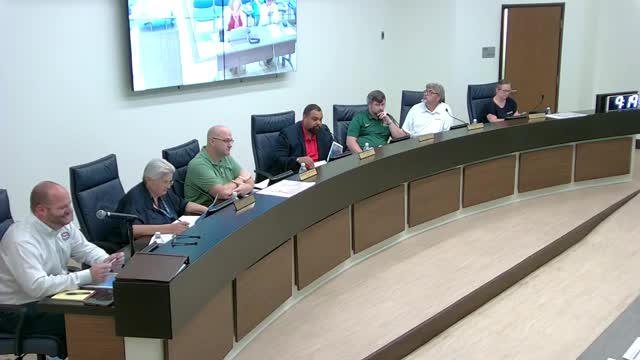
Summary
Finance Director Kiki Roman told the City Commission that the proposed fiscal 2026 budget is about $3.28 million out of balance in the general fund, including approximately $2.77 million in bond-related debt service. Commissioners discussed using reserves, cutting spending, modeling millage changes and waiting for late state revenue numbers.
Lynn Haven — Finance Director Kiki Roman told the City Commission at a budget workshop that the city’s proposed fiscal 2026 budget is out of balance by roughly $3,280,000 in the general fund, and she presented options including spending cuts, shifting funds and changing the millage rate.
Roman said the working draft shows general fund revenues of $22,299,000 against expenditures of $25,579,000. “It is a working document. It is not in balance. It is out of balance in the general fund by $3,200,000,” she said, adding the draft assumes the 4.5 millage rate the commission previously approved.
The most immediate driver of the shortfall is debt service tied to recent bonds. Roman said about $2,769,000 of the gap is debt service tied to bonds the city must pay from the general fund until FEMA reimbursements are received. Excluding that bond debt, Roman said the remaining structural deficit is about $510,000 and she recommended commissioners target an initial cut goal nearer $500,000 while they continue to explore revenue changes.
Roman demonstrated that, holding current taxable values, balancing the draft budget would require a millage of 6.45 mills — a number commissioners said they cannot legally impose because the commission capped the rate at 4.5 mills earlier this year. “If we wanted this budget to balance to 0, we would have to raise the millage to 6.45. Now, legally, we cannot do that because we capped it at 4.5,” Roman said.
Commissioners discussed alternatives. Commissioner Perna urged a 5% reduction across the full $62 million budget as a simple starting point to locate the roughly $3 million gap. Roman cautioned commissioners that some large budget line items are budget-neutral (grant-funded capital projects appear large on paper but do not reduce the general fund deficit because the revenue and expenditure offset each other) and that some savings could come from reallocating impact fees for certain fire items rather than from the general fund.
Roman also flagged timing uncertainty: she mirrored fiscal 2025 state revenue numbers in the draft because the state’s updated revenue figures were not yet posted on the state site. She told commissioners the state numbers are typically posted in August and that those amounts could increase projected revenues. “I fully expect those revenue numbers to go up,” Roman said, but added she could not predict the amount.
At the end of the workshop Roman said staff would prepare a revised proposed budget for the commission’s September meeting, incorporate commissioner guidance about impact-fee uses for fire equipment, and bring final numbers back before the formal adoption schedule under the TRIM process. She also scheduled a precommission review on Sept. 5 and said she would present a finalized proposed budget September 9 for the commission to consider.
The commission did not take formal action at the workshop; Roman described the draft as a working tool and solicited direction on priorities and cuts.
Looking ahead, Roman highlighted several levers commissioners said they would consider in coming weeks: modest personnel changes (the draft adds three positions citywide and includes a 3 percent cost-of-living adjustment), targeted expenditure reductions, use of restricted impact-fee and surtax funds for capital items, and awaiting final state revenue numbers before finalizing the budget.