
Residents and commissioners press for forensic review after procurement gaps flagged
Get AI-powered insights, summaries, and transcripts
Subscribe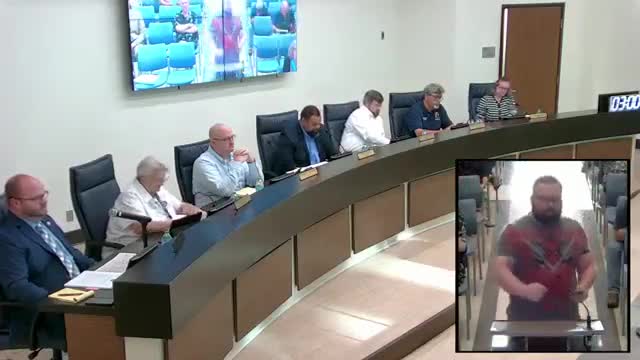
Summary
Public comment and commission discussion on missing procurement documentation prompted direction to staff to request quotes for a forensic audit focused on fiscal-year 2024 purchases at $35,000 and above and a review of procurement policy updates.
A public speaker who reviewed city records told the Lynn Haven City Commission that the city’s procurement files for the city hall rebuild lacked basic controls and documentation, including competition or single-source justifications for at least 18 purchases labeled as owner-direct purchases. The speaker said the records showed “no competition, no justification, no transparency.”
Commissioners discussed options for a forensic audit and for tightening procurement policy. Commissioner Tender pressed for a focused review of purchasing procedures and said she was “dumbfounded” on learning how the city’s $35,000 spending threshold could be used repeatedly in a single day. Interim City Manager Michael Lightfoot and city staff told commissioners they were revising the procurement policy and would provide a draft for review.
The commission directed staff to obtain quotes and a scope for a forensic audit of fiscal year 2024 purchases of $35,000 and above, and to return pricing and scope options for Commission consideration. Commissioner discussion also weighed whether the audit should include only purchases that did not come before the Commission and whether a procurement expert might be engaged to review draft policy changes.
Citizen James Finch told the Commission he had offered to fund a forensic audit if the city wished to accept private funding for that work; commissioners noted an external audit would still require staff and commission oversight.
Staff and commissioners framed the immediate next steps as: (1) finalize a narrowly defined audit scope (procurement-focused, FY2024, $35,000+ purchases, with an option to exclude purchases already approved by the Commission); (2) request proposals/quotes from audit firms; and (3) bring price and scope back to the Commission for a decision. No formal audit contract was approved at the meeting.
Commissioners and staff also emphasized that parallel work on a revised procurement policy was underway and that any policy changes would be returned to the Commission for approval. The discussion included repeated caution that audit and policy work could be narrowed if proposals exceeded available funds.
The Commission did not adopt an audit contract at the meeting; it instead requested bids/quotes and a proposed scope from prospective auditors, and asked staff to return recommendations to the Commission.