
Commissioners, hospital district spar over whether district can fund mosquito control
Get AI-powered insights, summaries, and transcripts
Subscribe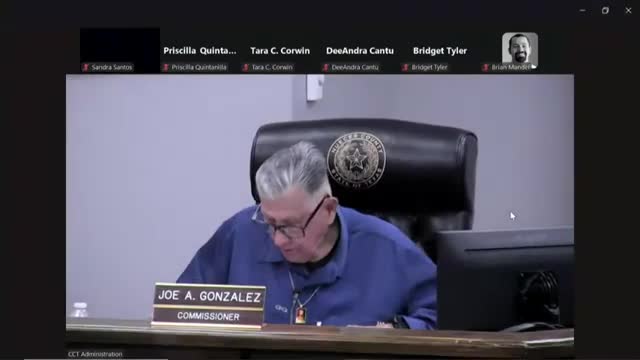
Summary
A commissioner asked the hospital district to fund a $300,000 vector-control program; district staff said state law and funding rules restrict how some district monies may be spent and the district cannot fund broad vector-control operations from indigent-care funds.
During the hospital-district public hearing and subsequent budget discussion, Commissioner Gonzales pressed the district to cover a $300,000 vector-control program to address mosquito problems affecting children and school buses. The district representative replied that revenue streams to the district are restricted in many cases to one-to-one care for individuals enrolled in indigent programs and that the district could not legally pay for broad vector-control operations out of those funds. He noted some district revenue derives from membership agreements with local hospitals and other sources and said the district must operate within legal boundaries. The commissioner argued the county faces immediate needs and that the district held significant cash balances, but the district representative reiterated legal constraints. Commissioners asked staff to follow up on whether restricted funds or alternative district fund sources (for example, opioid‑related or tobacco funds) could be used for vector control; commissioners left the $300,000 line in the county budget while asking for further verification. Why it matters: counties often rely on multiple local funding streams for public-health prevention and quarantine activities; whether a hospital district or county can fund mosquito control affects both public-health outcomes and budget allocations. Outcome: the district said it could not commit to funding vector control in that way; commissioners retained a $300,000 vector-control item in the county proposed budget while seeking legal clarification and discussion of alternate funding sources.