
Sanford staff seek direction on Waste Pro renewal as company seeks 22.19% rate hike
Get AI-powered insights, summaries, and transcripts
Subscribe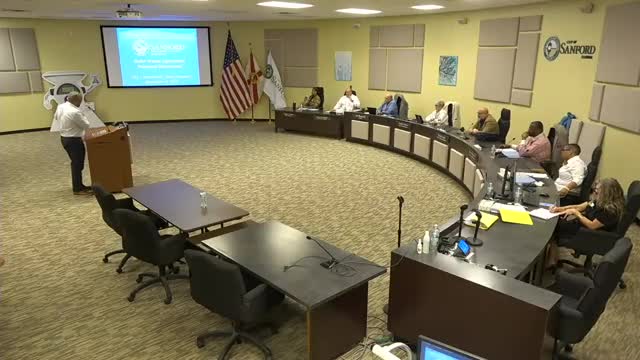
Summary
City staff asked the Sanford City Commission Sept. 8 whether to negotiate Waste Pro’s requested 22.19% rate increase or to prepare to go to bid ahead of the contract’s terminal date in 2030.
City staff asked the Sanford City Commission Sept. 8 for direction on Waste Pro’s proposed rate increase and on the contract end date, warning that the city needs time to prepare if it decides to go to market when the current agreement ends.
Brent Johnson, Public Works and Utilities director, reviewed contract history: the original agreement with Waste Pro was executed June 1, 2007; it contained successive renewal periods and, according to staff, the contract’s final extension expires in 2030. Johnson and the city attorney said the contract language and prior renewals make 2030 the firm terminal date after which the city would need to solicit bids for solid-waste services if a new extension is not agreed.
Waste Pro submitted a proposed fee increase that staff characterized as approximately 22.19%. Staff explained that earlier concessions have already been given to Waste Pro during prior renewals (an increase in the CPI cap from 3% to 4% and approval of disposal-cost adjustments). Johnson said the current base rate the city pays Waste Pro is $19.74 per residential unit; he warned that Waste Pro’s requested increase plus future CPI adjustments and disposal-cost changes could push the monthly residential charge to more than $28 by 2029 if all increases are approved.
Tim Dolan, Waste Pro representative at the meeting, described industrywide pressures — labor shortages, fuel and transportation costs, and CPI spikes — and said similar companies and municipalities are seeing increased bids and renewals with higher rates. Dolan said some comparable cities are negotiating multi‑year plans that ramp increases over time; he noted the market is evolving and that long-term terms can help smooth sudden jumps.
Commissioners asked staff for follow-up: verify the city’s current resident billing (a commissioner noted a $24.72 charge on a personal bill and asked staff to reconcile the reported $19.74 wholesale base), produce apples‑to‑apples comparisons with cities that have similar commercial/residential mixes, and evaluate options such as negotiating a longer contract with graduated increases or going out to bid. Several commissioners said they favor negotiating in good faith but wanted to avoid a large single‑year increase that would burden residents.
Why it matters: solid-waste collection is a recurring household utility cost; any approval of a large increase would affect residential utility bills and municipal budgets. Staff said the city needs direction now because procuring a new hauler and arranging transition can take about a year.
Outcome at the session: commission discussion produced direction for staff to (1) confirm the city’s billing numbers and administrative fees; (2) compile comparable contractRate data from similar municipalities; and (3) return with options for negotiating a new term or going to bid in advance of 2026–2030 contract milestones. No final rate decision was made at the work session.