
Commission approves airshow permit as dispute over policing costs continues
Get AI-powered insights, summaries, and transcripts
Subscribe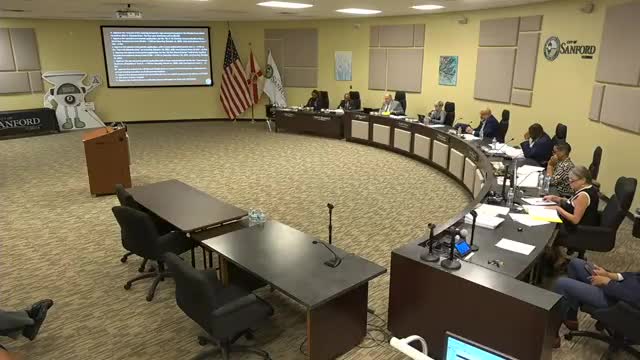
Summary
After heated debate among the airport, show promoter and Sanford Police, the commission approved the Orlando Sanford International Airport airshow permit as presented and instructed staff to pursue further discussions about policing costs and mutual‑aid options.
Sanford commissioners approved an airshow permit Aug. 25 amid a dispute between the show promoter, airport officials and the Sanford Police Department over who should pay for law‑enforcement costs.
The promoter’s representative told the commission the airshow generates an estimated $12.8 million in regional economic impact and asked the city to allow other jurisdictions to provide policing “in kind” rather than charge the promoter. The promoter said the event would be put on in 2025 despite the dispute but warned that charging Sanford Police Department costs could jeopardize the 2026 event.
Sanford Police Chief argued that policing for the airshow had cost the city about $70,000 in previous years and that the department had requested reimbursement or participation in cost sharing. The chief noted the city is responsible for public‑safety operations inside its boundaries and that any mutual‑aid deployment must be formally accepted by the police chief—not by a private vendor.
Airport Deputy CEO George Spig described the airshow’s history at the Sanford airport and said the airport does not derive profit from the show; the event is used to showcase the airport and attract airlines. Spig said the airshow generates broad regional visitation and that several features—such as downtown evening activities in prior years—had been discontinued after early disagreements about in‑kind services.
Commissioners pressed for data on economic impact and whether visitor activity flowed into downtown Sanford. Staff said placard/placeline (cell/placard) data had been forwarded to the Economic Development office for review. Several commissioners said the city should be consistent in charging for police services when other special events are billed to participants, and others said the city should work to preserve the airshow because of its regional draw.
After extended discussion the commission voted to approve the permit “as is” with a plan for staff, the chief and airport and promoter representatives to meet and attempt a compromise on policing and cost allocation; commissioners said they expected a follow‑up within two weeks. The chief and several commissioners emphasized that logistically the city needs more lead time for staffing and mutual‑aid arrangements.
Ending: Commission approval allows the promoter to proceed with advertising and operations under the existing permit terms; staff and the chief will pursue discussions on cost sharing and the possibility of other jurisdictions providing in‑kind policing under a mutual‑aid agreement if the chief authorizes participation.