
Commission approves chronic nuisance assessment roll after public queries about notice and hardship
Get AI-powered insights, summaries, and transcripts
Subscribe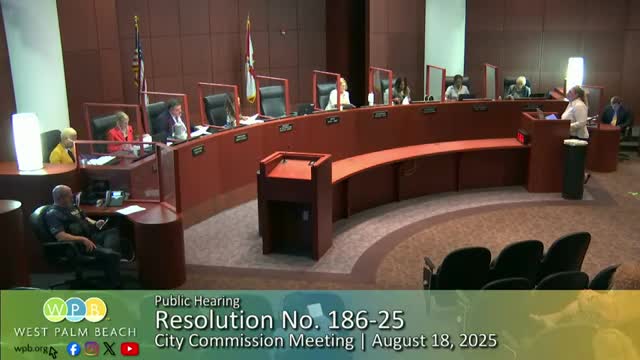
Summary
The commission adopted the chronic nuisance special assessment roll for fiscal year 2025–26, converting unpaid code‑abatement charges into special assessments on properties; staff and the city attorney explained notice procedures, limitations on hardship adjustments and how the assessment attaches to the property.
On Aug. 18 the City Commission adopted a resolution placing unpaid chronic nuisance abatement charges onto the property tax roll for fiscal year 2025–26, a step staff said is intended to recover city costs for abatement of repeatedly noncompliant properties.
Bridget Souffrant, chief financial officer, told commissioners she was directed at a July 17 special meeting to compile unpaid chronic nuisance charges for placement on the special assessment roll. She said property owners received prior notices from code enforcement and that finance issued a 20‑day statutory notice before the roll was finalized. Souffrant said the city received one written objection and that finance reviews any written objections by auditing the file for charging errors; owners have until Sept. 12 to pay or make arrangements before the file is sent to the county tax roll.
City Attorney explained that chronic nuisance charges reflect city costs incurred to abate conditions at properties that repeatedly fail code compliance and that the local ordinance does not provide a discretion to reduce individual charges: the assessments are intended to recoup the city’s actual expenditures.
During public comment, a property owner who had purchased a tax‑deed property at auction said he had not known about prior charges and asked city staff for assistance. Staff and the city clerk told the owner staff would meet with him after the hearing; finance staff indicated the department could correct the roll if an error was later found.
Commissioners asked about hardship accommodations and whether the assessment attaches to the property. Staff and the city attorney said the assessments are attached to the property and will appear on the tax bill; staff will continue to work with owners before Sept. 12 to resolve apparent errors or accept payment arrangements. The resolution adopting the assessment roll passed unanimously.