
West Palm Beach approves $1.48 million CORE grant to expand fire department opioid response
Get AI-powered insights, summaries, and transcripts
Subscribe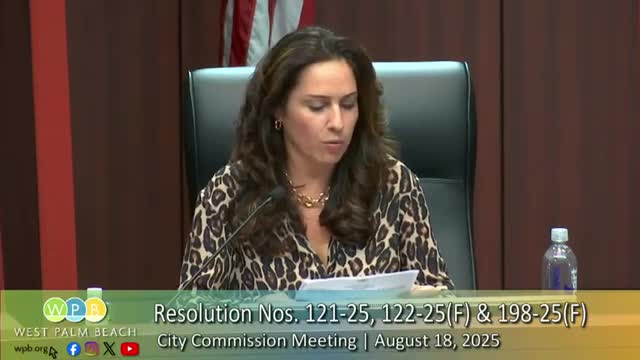
Summary
The City Commission approved resolutions to accept and appropriate grant funds from Southeast Florida Behavioral Health Network to launch a coordinated opioid recovery (CORE) program led by the West Palm Beach Fire Department; the three-year grant covers staff, vehicles, equipment and operational expenses with no city match.
The City Commission of West Palm Beach on Aug. 18 approved a package of resolutions accepting and appropriating a grant from the Southeast Florida Behavioral Health Network to create a fire-department–led Coordinated Opioid Recovery (CORE) program.
The CORE grant totals roughly $1.48 million distributed over three fiscal years and, according to city staff, requires no local match. The funding will pay salaries and benefits for two fire department positions (one lieutenant and one firefighter), vehicles, medical equipment, training and operational costs to connect people treated for opioid emergencies with addiction treatment and recovery services.
Tom Moran, division chief of emergency medical services for the West Palm Beach Fire Department, told commissioners the CORE model integrates first responders, emergency departments, treatment clinics and peer navigators to interrupt overdose cycles and increase engagement with medication-assisted treatment. Moran said the department would train paramedics to enroll candidates and follow up with patients after transport so they can transition into outpatient treatment, including services offered by the Health Care District and a medically assisted treatment clinic located on the JFK North campus.
Moran said the city was chosen because of the local overdose caseload and that CORE operates in 29 Florida counties. He said the grant funds would allow the department to establish medically assisted treatment protocols and administer medications such as buprenorphine to reduce cravings and withdrawal and improve retention in care.
Commissioners asked about trends and sustainability. Moran said overdoses in the city average about 350 calls per year on a multi-year rolling basis and that those counts have been declining anecdotally and in the department’s data; he offered to provide exact figures on request. On sustainability, Moran said options include using recurring state opioid remediation funds that the city receives and reapplying to the managing entity for continuation funding after the three-year term.
Commissioners voiced support for the program’s community approach. A motion to approve the grant resolutions was made and seconded; the commission voted in favor and the measures passed unanimously.
The fire department will provide monthly reports to the Southeast Florida Behavioral Health Network and return to the commission if staff recommends changes to the program or funding plan.