
Anacortes council weighs committee-of-the-whole, remote-attendance limits and public‑comment rules
Get AI-powered insights, summaries, and transcripts
Subscribe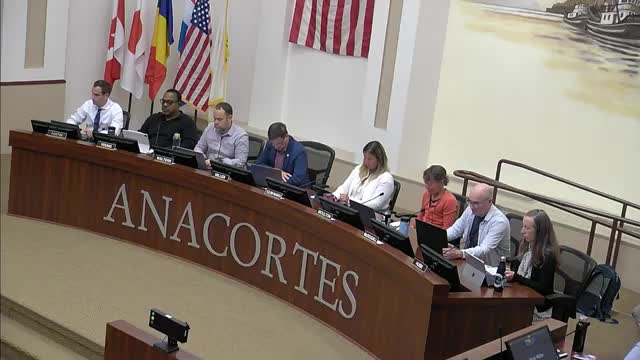
Summary
At an extended Aug. 2025 workshop, the Anacortes City Council debated overhauling its committee structure, clarifying remote-attendance limits and tightening public‑comment and consent-agenda procedures; staff will draft formal rule language for later council action.
The Anacortes City Council spent a workshop session in August 2025 discussing whether to replace parts of its three-member committee system with a rotating committee-of-the-whole or a hybrid model and to formalize rules governing remote attendance, public comment and what belongs on the consent agenda. Mayor Miller opened the workshop as staff and seven council members sat around a table to encourage more conversational exchanges.
Council members said the matter matters because changes would affect how and when elected officials see information, how staff time is used and how the public experiences transparency. Councilmember Walters said the goal should be “better discussions and better outcomes,” and Mayor Miller urged the group to use the session to produce specific, workable changes.
The debate split along two main lines: council members and staff who favored more frequent full‑council discussions so all seven members hear the same briefing at the same time, and members who defended smaller, informal committee meetings as a place for staff to get early, candid feedback before issues reach the full council. Supporters of the committee-of-the-whole model argued it would reduce the perception that a subset of councilmembers had an information advantage; supporters of the smaller-committee model said those committees let directors test ideas and let councilmembers develop subject-matter familiarity.
On technical and procedural items, staff and council discussed several specific changes staff were asked to draft for council review: defining who chairs a meeting when the mayor and mayor pro tem are absent (one suggested tie‑breaker was the councilmember with the longest tenure); setting an upper limit on virtual attendance (several councilmembers proposed roughly 12 remotely attended meetings annually as a starting point); clarifying whether cameras must remain on for remote participation; formally adopting Robert’s Rules of Order and providing training; tightening the statement of when ordinances require two readings; and standardizing agenda memo contents so staff submissions are consistent and searchable.
Staff also asked council for guidance on expanding items eligible for the consent agenda, proposing additions such as routine public‑works contracts below a dollar threshold, non‑substantive contract time extensions, and low‑dollar interlocal agreements or amendments that do not change scope. The city attorney and contract specialist recommended clearer thresholds and asked council whether it was comfortable delegating routine contract placement to staff when items meet defined criteria.
Public comment procedures were another extended discussion topic. Council reviewed possible changes including: requiring commenters who participate remotely to keep cameras on; offering clearer online instructions and registration tools for remote testimony; limiting visual presentations during public comment while allowing handouts; and adopting a short, posted checklist of public‑comment rules (for example, address the council rather than the audience). Several members favored maintaining the existing in‑person accessibility and warned against creating barriers that would deter residents from speaking. Staff said the city should post clearer online guidance and consider matching rules across advisory boards and commissions.
No formal policy votes were taken at the workshop. Staff and the city clerk were directed to draft proposed amendments reflecting the range of options discussed, including: (1) a hybrid model that preserves some small committees but schedules periodic full‑council work sessions; (2) draft language on remote attendance caps and camera guidance; (3) sample consent‑agenda thresholds and agenda‑memo templates; and (4) updated public‑comment language consistent with MRSC guidance and the Open Public Meetings Act. Mayor Miller said staff would compile the written proposals and return a draft procedures ordinance or policy for formal consideration and adoption at a later meeting.
Councilmembers and staff agreed the topic merited further, structured work rather than a single vote tonight. The workshop format — chairs around a table with directors present — will be used again while staff prepares concrete language and threshold suggestions for council review.