
Proposal for youth shelter draws county concern over demand, licensing and costs
Get AI-powered insights, summaries, and transcripts
Subscribe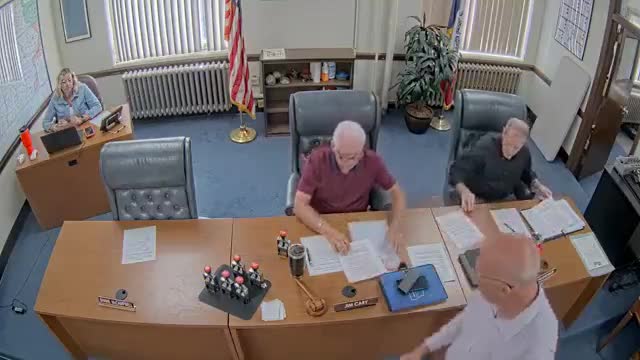
Summary
Transitions presented plans Aug. 22 to open a shelter for unaccompanied minors in Burlington; supervisors and county staff questioned the scale of need, licensing requirements under IowaDHHS Chapter 105 and HUD point-in-time counts, and the presenter withdrew the county-level request pending further work.
A nonprofit told the Des Moines County Board of Supervisors on Aug. 22 it intends to open a shelter for unaccompanied children ages 12 to 18 at a building under consideration in Burlington, but the proposal prompted extended debate about the size of the local need, licensing requirements and likely costs. After sustained questioning from supervisors and county staff, the presenter withdrew the group's request to use county facilities and said the organization would "find another location" and continue planning.
The shelter proposal described a site at the Des Moines County Health Center address on North Third Street and estimated capacity of up to 30 children, depending on how the building could be modified to meet facility standards. The presenter said the shelter could provide both temporary and longer-term placements and outlined a prospective staffing model of five full-time monitoring staff, two fill-in staff, one janitor and one receptionist. The presenter said transitions was working with local schools, the county health department and Great River Medical to coordinate services and to review licensing and Chapter 105 general shelter-care-home standards with Iowa Department of Health and Human Services (DHHS).
Supervisors and county staff pressed the presenter for evidence of local need and for clarity about licensing and financial feasibility. Supervisor Tom Broger cited federal and state point-in-time and agency counts and said those sources report very small numbers of unaccompanied, unsheltered children in Iowa (for example, a HUD point-in-time category showing five unaccompanied unsheltered persons statewide in 2024) and warned that national or aggregated statistics can mislead local planning if not disaggregated. Broger said using the larger national numbers in public materials could be misleading for Des Moines County.
County staff and outside agency representatives raised concrete constraints that would affect whether a local shelter could open and be used by courts or DHHS placements. Staff mentioned Chapter 105 licensing standards for general shelter-care homes and said a facility must meet building code and fire-safety requirements, including potential requirements for sprinklers and divided sleeping areas by age and sex; staff also said reimbursement rates and ongoing operating costs make staffing and the capital costs of renovations substantial barriers. One county official said, "When you place a juvenile in a local shelter, they're more inclined to run away," noting that proximity to a child's existing environment can have both benefits and risks for retention and safety.
After the discussion, the presenter said, "I'm gonna pull my request. I will find another location and transitions will develop a home facility for other government minors. I appreciate your time." The board took no formal vote on approving a county facility or committing county resources.
Authorities and sources discussed during the meeting included the McKinney-Vento Act (school district responsibilities for homeless students), HUD point-in-time and the annual Homelessness Assessment Report to Congress (cited for statewide and national figures), DHHS licensing standards (Chapter 105, general shelter-care homes), and local contacts such as Young House and its director, who were referenced as having worked on juvenile residential programming.
Next steps: The presenting organization will not pursue use of the county health building at this time; the presenter said it would seek other locations and continue planning, including meeting with building and health inspectors and developing financial plans and contractor quotes. County staff recommended additional vetting of building code, fire-safety and DHHS licensing requirements before any future formal request for county involvement.