
Supervisors continue work on wind, solar and battery ordinance after public raises concerns about draft
Get AI-powered insights, summaries, and transcripts
Subscribe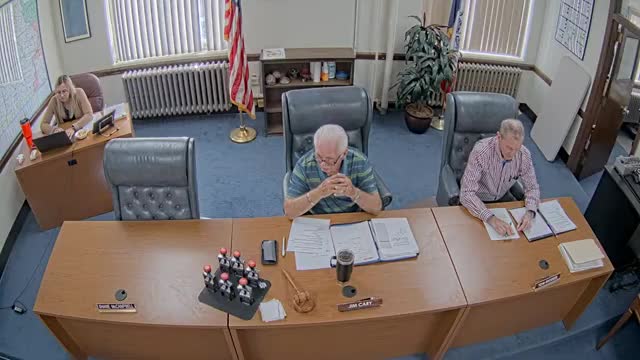
Summary
A lengthy work session covered a new standalone battery-energy section and other changes to a county ordinance governing wind and solar; members of the public said the draft circulated Friday did not match earlier work-session discussions, and supervisors set a process for collecting written comments and scheduling a follow-up review.
Des Moines County supervisors held a work session Sept. 9 focused on updates to the county’s wind, solar and commercial energy storage ordinance, including a newly drafted standalone section for battery-energy storage systems. Public commenters and several supervisors said the draft released on Sept. 5 did not reflect changes they had discussed in prior meetings, prompting a decision to gather written comments and hold a targeted review before finalizing the ordinance.
Resident Rose Fisher told the board she had reviewed prior meeting videos and transcripts and identified multiple items she said were included in the draft despite earlier board direction not to adopt them, and other requested items that the draft omitted. Fisher cited examples including a two-step permitting process and the timeline for removing failed turbine components. Other members of the public, including Cindy Newberry and Brad Coates, urged the board to publish incremental draft changes after each work session so supervisors and the public can track edits as the ordinance evolves.
Southeast Iowa regional planning staff and county staff said the planning office had circulated the Sept. 5 draft to reflect work to date but that the board would review the ordinance as a whole and then revisit chapters for line-by-line edits. Supervisors and staff agreed to a process: interested residents and reviewers should send consolidated comments to the county office (Sarah’s office) by the end of the week; staff will forward those submissions to regional planning; and the board will hold a follow-up review session in roughly two weeks to examine work-to-date and proposed changes.
Substantive technical points discussed by supervisors, staff and public commenters included setbacks, noise limits, battery safety and environmental testing. Staff described the new battery section as standalone rather than folded into a wind or solar chapter. The draft contains two setback tables: one for systems that do not contain lithium-based chemistries and one for lithium-ion or similar chemistries; staff said the lithium-related setbacks are approximately double the non-lithium setbacks. The draft allows written waivers for shorter distances if individual property owners sign a waiver that applies only to those properties; supervisors asked for clarity about who may sign such waivers.
On safety, staff proposed requiring compliance with National Fire Protection Association standards, including NFPA 855 for stationary energy storage systems, NFPA 1 and NFPA 70. For sites located near sensitive water features, the draft would require secondary containment or retention systems sized to capture electrolyte leaks and to accommodate a 100-year, 24-hour storm plus fire-suppression runoff. The draft calls for quarterly inspections and sample testing during the first year of operation of any required containment system, including pH, specified metals and lithium; owners would provide results to the county conservation board and be required to remediate any confirmed contamination.
The board and attendees debated a noise limit. Staff reported that many ordinances use 50 decibels at the property line, or 45 dBA from an occupied dwelling, and noted Henry and Lee counties as local comparisons. Supervisors discussed measuring at the dwelling or at a 30-foot radius from a dwelling; one supervisor said he was “comfortable with 50” dBA as proposed at the meeting but no formal vote was taken. Commenters pressed for clarity about measurement locations and for field visits to existing battery and solar installations to observe real-world noise levels.
Other provisions discussed included fencing and security (minimum height and locked access), signage (24-hour emergency contacts, battery chemistry, GPS coordinates and emergency shutoff info), vegetative screening and a 75% porosity standard for fences near public rights of way to minimize snowdrifts (with a waiver option where studies show no snowdrift increase). Staff also reported proposed language asking that battery equipment materials and configurations be proven by comparable projects — the draft suggests technology used on at least two projects of 25 megawatts or greater that have been operating for a number of years within a 250-mile radius, though supervisors discussed precise wording for “operational.”
Board members and staff emphasized that many items remain draft language under discussion: supervisors asked regional planning staff to compile changes and to publish comments with the work-session packet. The board asked commenters to submit lists of discrepancies so staff and regional planning can prepare a consolidated comparison for the next review session.