
Binghamton board reviews elementary attendance zones as Roosevelt rebuild nears
Get AI-powered insights, summaries, and transcripts
Subscribe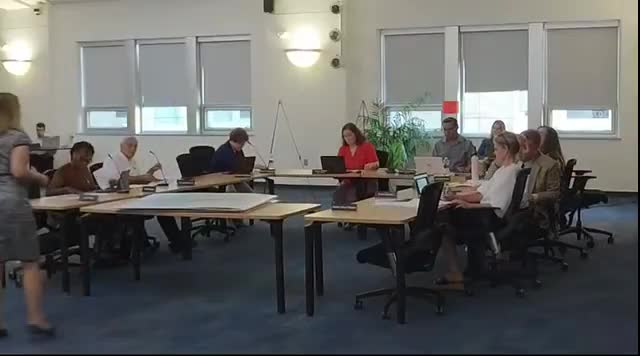
Summary
Superintendent presented maps, enrollment trends and community feedback as the district explores attendance‑zone shifts tied to a temporary relocation during Roosevelt Elementary School construction and longer-term enrollment changes.
Superintendent Tanya opened a multi-hour discussion Tuesday on elementary attendance zones, presenting maps, enrollment projections and community feedback as the district prepares for construction at Theodore Roosevelt Elementary and considers boundary shifts to balance class sizes and building capacity.
The superintendent said the district’s overall elementary enrollment is 2,103 students and noted that the most recent enrollment forecast is arriving earlier than predicted: “the last time I did enrollment study 3 years ago…what was predicted…is coming to a year early,” she told the board.
District staff framed the review as an effort to preserve neighborhood schools while maintaining small, equitable classes. The superintendent repeated the board’s prior commitment to “small class sizes that were defined…16 to 18” and said any boundary changes would not include school closures. She described a temporary plan tied to the Roosevelt rebuild: roughly 20 classrooms would be relocated temporarily across several schools while the new Roosevelt is constructed; the superintendent said the new building’s planned capacity would be similar to the current facility and that the district “was not able to afford an increased capacity.”
Why it matters: board members and community speakers said changes could affect transportation, student continuity and demographic balance across schools. District staff and the board repeatedly raised questions about bus capacity, student safety on walking routes across rivers and highways, and how shifts might affect populations such as English learners, students receiving special education services and homeless or recently migrated students.
Board members offered specific geography-based suggestions for scenario testing. One member asked that students who currently attend Roosevelt during its temporary relocation be allowed to return to Roosevelt once construction is complete while noting that many families might prefer to stay in their temporary schools. The superintendent said the district would examine “grandfathering” options but cautioned that accommodating all requests could exceed building capacity. She told the board the timetable for any boundary implementation is not immediate: “we're not talking about these kinds of shifts for 3 more years to happen.”
District staff summarized community input that emphasized maintaining neighborhood schools, avoiding large demographic shifts between buildings, preserving continuity for cohorts through middle school and ensuring English-as-a-New-Language and special-education services remain accessible at every campus. Parents voiced concerns about long bus rides and unsafe walking routes that cross major roads or rail lines.
Staff described the data and tools they used: current attendance-zone maps, a February midpoint enrollment snapshot the superintendent called the district’s “sweet spot” for planning, building capacity worksheets (sections and usable rooms), and a scatter-plot map showing student home locations. The superintendent said facilities staff identified “usable” instructional spaces and special-area rooms (art, music) that may or may not function as additional classroom capacity.
Discussion vs. direction vs. decision: the meeting produced detailed discussion and scenario suggestions but no formal action or vote. The board directed staff to continue community engagement, run street‑level rezoning scenarios (including several suggested by board members), provide clearer capacity numbers for the new Roosevelt building and return with refined options next month. The superintendent told the board the attendance‑zone discussion will continue at the board’s July 19 meeting.
What’s next: staff said they will continue community forums, send postcards and QR-code flyers, refine boundary-drawing options by street, quantify bus impacts, and produce a capacity table for the new Roosevelt building. The district will also report counts of fifth-graders who might request grandfathering and analyze whether the district can accommodate those requests without exceeding room or staffing limits.
The board and superintendent emphasized intent to preserve neighborhood schools while achieving more equitable class sizes and realistic facility use.