Get email alerts on the Water Utility Ami Pilot topic
No spam. Unsubscribe anytime.
Council approves $50,000 pilot for advanced water-metering system
Summary
The Sutherlin City Council voted to fund a $50,000 pilot of an advanced metering infrastructure (AMI) system using water construction funds; the pilot is intended to test remote reads, leak alarms and inform a later full rollout estimated at $1.2–$1.5 million.
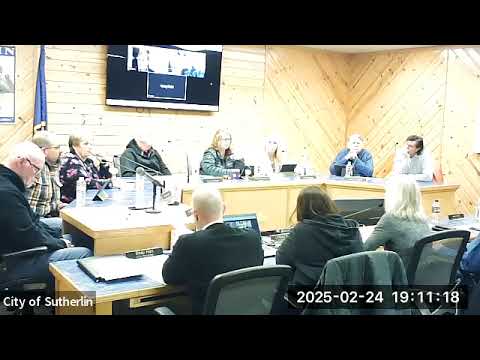
The Sutherlin City Council voted to authorize a $50,000 pilot for an advanced metering infrastructure (AMI) system for the city’s water meters, Finance Director Tammy Trowbridge told the council.
Trowbridge said the pilot would be paid from the water construction fund and would buy meters and the collector hardware needed for a small-scale trial. “We are asking for permission to move forward spending $50,000 out of the water construction fund for a pilot project on an advanced, metering infrastructure pilot program,” she told the council.
The pilot is intended to address two longstanding problems the city has experienced: aging meters that are increasingly inaccurate and an outsourced monthly read that has become more costly and less reliable. Trowbridge said the contractor’s costs rose about 84% in seven years while service and accuracy declined, requiring frequent rereads and staff time to handle customer complaints.
City staff told the council the pilot would let the city test radios/collectors that deliver automated reads and alarms for unusual usage, which can alert staff and customers to leaks quickly rather than waiting a full billing cycle. Trowbridge said the full project implementation had previously been budgeted at $400,000 for the current year but that staff’s current estimate for replacing the system is between $1.2 million and $1.5 million; the council would consider phases and final vendor selection after the pilot and staff due diligence.
Council members asked how the pilot would be structured and who would bear costs for meter replacement. Staff replied the $50,000 is the city’s cost for the pilot equipment and collectors and that meters purchased for the pilot would remain city property if the city decided to adopt the system after testing. Staff said one vendor promised near‑complete coverage given the city’s terrain and spread-out service area.
After discussion the council voted to proceed with the pilot. During the roll call: Councilor Woods, Councilor Daigle, Councilor Sarnowski, Councilor Hamilton, Councilor Whitaker and Mayor Summer voted “aye.” One councilor voted “no,” saying they preferred keeping a human meter reader on staff. The motion carried.
The pilot will allow staff to compare two finalist systems on reliability, accuracy, equipment life and total cost of ownership. Trowbridge said staff will return with vendor recommendations, any recurring service fees, and a proposal for broader implementation if the pilot is successful.
Votes and next steps: staff will award the pilot contract to one vendor after due diligence and start the small-scale installation; if the city chooses the system, pilot hardware would be retained and credited toward full implementation costs.
AI generated
The text on this page is AI generated. Summaries, highlights, analysis, and video transcripts are all produced from the original source material.
AI can make mistakes, so if you spot one, and we will fix it for everyone.
Note: the source content is unaltered by us. Any content source we link to, be it a video, an audio recording, or a document, is presented exactly as its publisher released it. That publisher is usually a government body, sometimes an individual official or another organisation.