
District reports more drivers and routes; transportation staff say on‑time performance improving though challenges remain
Get AI-powered insights, summaries, and transcripts
Subscribe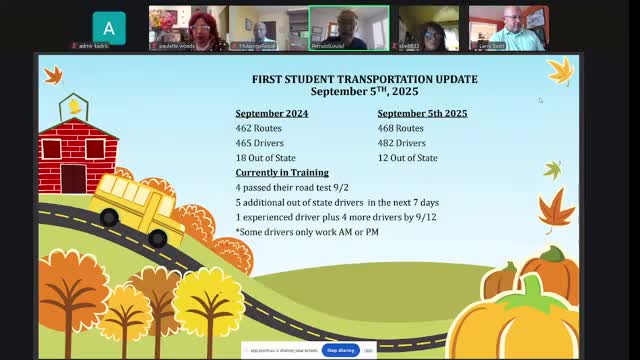
Summary
Officials said the district increased drivers and routes versus last year, trained new drivers and expects additional out‑of‑state recruits. Transportation leaders said on‑time arrivals improved but occasional missed stops persist; board members asked about AI routing and options to reduce overtime.
Buffalo Public Schools transportation officials told the work session they increased the number of drivers and routes this school year and have made measurable improvements in on‑time performance, while acknowledging continuing operational challenges. Chief Operating Officer Lou Petruzewski (presenting on transportation staffing) said the district had 468 routes and 482 drivers as of the current comparison, up from 462 routes and 465 drivers the previous September; additional out‑of‑state drivers were expected to arrive in the coming days.
Why it matters: Bus staffing and routing affect student attendance, breakfast access and teacher scheduling. The district said increasing driver counts, training new drivers and building a larger pool for call‑ins reduces delays and supports three bell times across the system.
What officials reported: Petruzewski said training produced new drivers who passed road tests and the district expected five additional out‑of‑state drivers within a week and several more in short order. He said some drivers work only mornings or afternoons, and maintaining a larger pool helps cover absences. On performance, Petruzewski said the first two days of the school year showed roughly a 20‑minute improvement on the last bus drop‑off time compared with the opening day the year before; he also reported isolated incidents where buses left early, requiring the district to dispatch secondary buses.
Board questions about technology and efficiency: Board members asked about using route‑optimization software and AI. Petruzewski said First Student (the district contractor) uses routing tools and some AI capabilities but that district parameters — notably three fixed bell times and special obligations such as students in Department of Social Services placements and McKinney‑Vento students — limit automated optimization. Board members advocated independently auditing routing efficiency with third‑party AI vendors and exploring two‑tier bell schedules to reduce overtime and retain teachers.
Next steps: The transportation office said it will continue recruiting and training drivers, examine overtime and other cost drivers, and report back to the board with further metrics. Petruzewski asked stakeholders to report specific routing problems so staff can respond.
Bottom line: Transportation staffing has improved from the prior year, with more routes and drivers and early improvements in arrival times; district officials say a combination of recruiting, training and technological review (including potential outside AI assessments) will guide further gains.