Planning commission weighs state single‑room‑occupancy definition after recent legislative changes
Summary
Staff summarized new state language that defines single‑room‑occupancy (SRO) housing and asked whether the city should adopt the state definition verbatim or adapt it; commissioners debated eliminating older 'rooming/boarding language to reduce confusion and asked staff to return with a streamlined code draft.
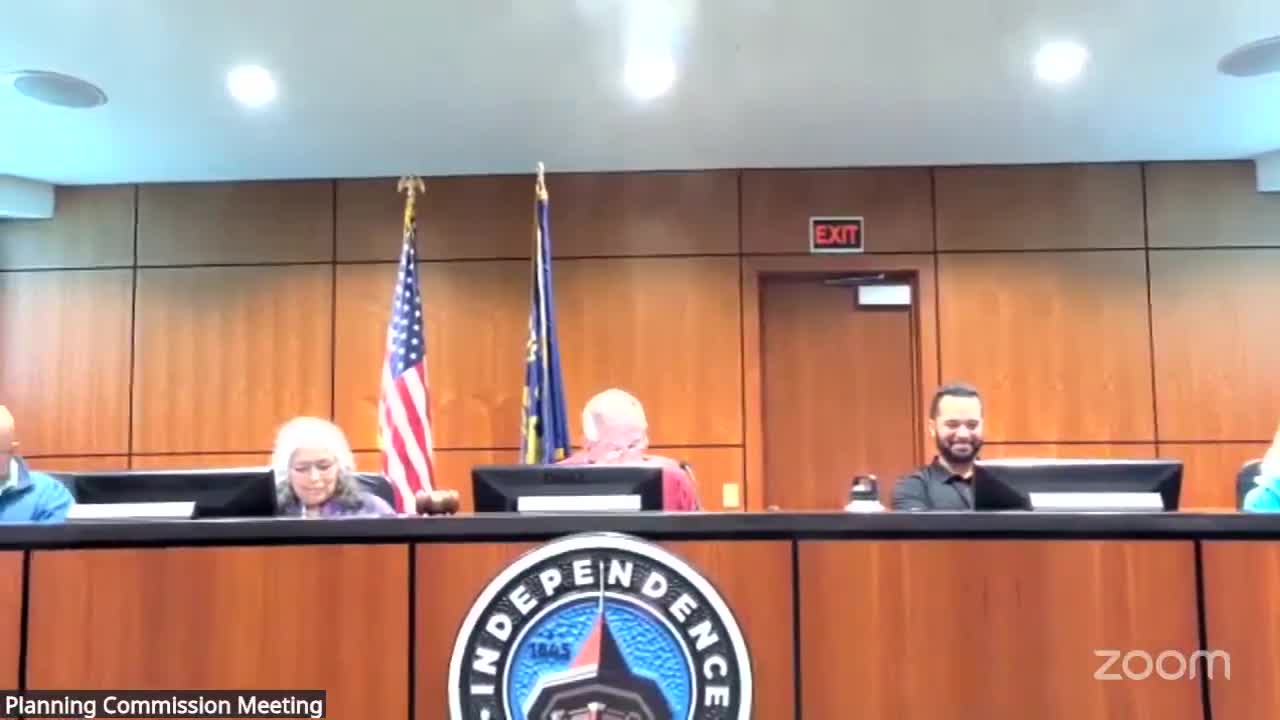
City planner Fred told the commission that recent state changes to single‑room‑occupancy definitions require the city to revisit multiple, overlapping local use categories. He read the state definition aloud and asked whether Independence should adopt the state text or adapt it to local needs. Why it matters: how the city defines SROs affects permitting, the distinction between rooming houses and SRO developments, and how small, shared‑facility housing for students or lower‑cost renters is regulated. Fred read the state wording into the record: "single room occupancies means residential development with no fewer than four attached or detached units that are independently rentable and lockable and provide the living and sleeping space for the exclusive use of an occupant, but require that the occupant share sanitary or food preparation facilities with other units in the occupancy." He told commissioners the "no fewer than four" language is the part staff want direction on because that threshold excludes some housing arrangements that currently sit in gaps in the local code. Commissioners discussed whether to preserve existing city categories such as "taking of boarders or renting of rooms," or to eliminate those provisions and rely on a single SRO definition for clarity. One commissioner recommended removing redundant "boarding" language so the code could be streamlined and more objective for applicants and staff. Fred said the state definition closely matches some existing local categories (for example, quads) and that simplifying the code could reduce confusion for applicants and staff. He also noted that other residential facilities (for example, licensed residential care or senior living) are differently regulated and would not automatically be covered by SRO language. No formal vote was taken. The commission asked staff to return with a revised draft that either adopts the state definition verbatim or adapts it to remove overlaps with existing local categories; staff will present the revised code at a subsequent meeting.