Get Full Government Meeting Transcripts, Videos, & Alerts Forever!
Get email alerts on the Historic Preservation topic
No spam. Unsubscribe anytime.
Independence preservation panel reviews standards for altering historic houses
Summary
At a regular meeting, staff reviewed the city's historic preservation code (Subchapter 59) and local examples of Victorian-era house types, emphasizing the commission's criteria for evaluating alterations and a preference to "repair rather than replace."
At a meeting of the Independence Historic Preservation Commission, a city planning staff member reviewed the commission's historic preservation code and applied preservation standards to local Victorian-era house types, focusing on how the body evaluates alterations and additions to historic properties.
The presentation, which staff described as a training session, explained that Subchapter 59 of the City of Independence Development Code governs local historic review and that the commission uses two primary criteria to decide on alterations: whether work will "recreate or approximate the historic character, appearance or material composition of the original structure" or whether it is "compatible with the historic characteristics of the area." Staff cited the Secretary of the Interior's Standards for Rehabilitation as the source of the code's guidance and summarized the commonly applied principle to "repair rather than replace" deteriorated historic features.
Why it matters: the commission evaluates individual applications that affect house exteriors and can approve or deny changes that alter the character of buildings in the local historic district. Staff told commissioners these reviews aim to retain distinguishing features such as historic siding, window patterns and porch details and to avoid alterations that create a false sense of historic development.
During the session staff contrasted Type 1 and Type 2 alterations: Type 1 applies to noncontributing resources within a historic district; Type 2 applies to contributing (historic) resources. Staff said the guidelines support retaining historic materials and features when feasible, prioritizing repairs, and prioritizing visibility (for example, front facades) when full restoration is not possible.
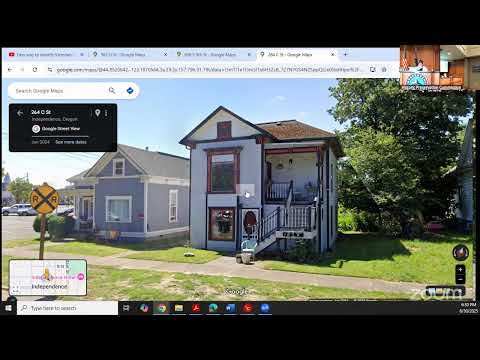
The presentation used local examples to illustrate changes over time. Staff identified specific local properties by address (including 190 South Third Street and 482 South Fourth Street) and noted that only about two local buildings were classified as "stick style" in the city inventory. Several houses shown in older images had changes staff said were typical, including enclosed porches, altered rooflines and replacement windows, which staff observed often shifted character when vinyl or nonhistoric windows were installed.
Commissioners asked how the code treats additions and which features may be replaced when original fabric is missing. Staff said new additions should not destroy historic materials, should be differentiated from the old work and should be compatible in massing, size and scale. Staff also acknowledged economic constraints: some property owners cannot afford custom wood windows, and staff said they try to prioritize visible elements and encourage owners to consult craftspeople who work with historic materials when feasible.
The commission approved the minutes and later adjourned; there were no formal changes to code language or approvals of permit applications at this meeting. Staff said they would circulate the code references and supporting materials after the meeting.
The discussion was framed as training and review: commissioners and staff reviewed types of Victorian-era architecture present locally (Italianate, Queen Anne, Gothic and stick-style examples), common alterations seen in town and how the code's guidelines are applied when documentary or pictorial evidence is not available to substantiate an original condition.