Get Full Government Meeting Transcripts, Videos, & Alerts Forever!
Get email alerts on the City Budget Levy Fee topic
No spam. Unsubscribe anytime.
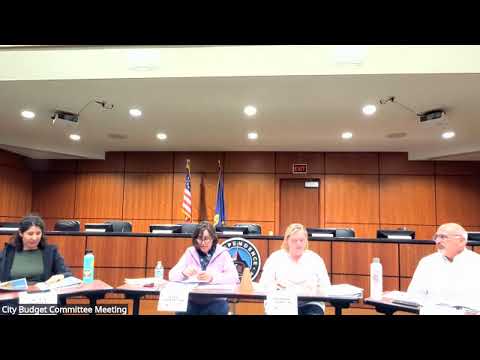
Independence budget committee debates levy and utility-fee options to keep library, museum and parks open
Summary
Budget committee members and residents debated levies, a monthly utility charge and voluntary donations as ways to close a projected shortfall that could affect library hours, the local museum and parks funding.
The Independence Budget Committee spent much of its meeting debating whether to pursue a ballot levy, a monthly utility fee or voluntary giving to preserve current library hours, the city museum and some parks programs.
The discussion opened with a public comment from Gabby Walden, who said she came as "a parent, a city volunteer for nonprofits and a small business owner" and urged clearer communication and broader engagement as the city considers revenue options.
City staff and committee members reviewed several revenue options. One scenario presented staff and several committee members ascribing dollar figures to possible approaches: a $5 monthly fee was discussed as an example; staff noted that, depending on other rate changes, a $5 fee could translate into an effective increase of about $2 per month for some households when offset by an anticipated $3 reduction in the public-safety fee. A separate motion during the meeting referenced a levy sized to raise roughly $235,000 for the coming year, though that motion did not receive a second.
Committee members repeatedly cautioned that fees tied directly to utilities or to specific parcels could be subject to Oregon property-tax limits (Measures 5 and 50) and other legal constraints; staff advised that certain structures (for example, zoning- or property‑value–based assessments) could be treated as taxes under state law and should be approached cautiously.
Several members, including Councilor Dana and Councilor Kate, emphasized the need for public education before asking voters to approve a levy. Councilor Dana said the city had "less than a year" last cycle to educate voters and suggested a two‑year outreach window was ideal for a successful ballot measure. Others, including Councilor Shannon and Councilor Marilyn, said the recent ballot defeat showed limited appetite for new taxes or fees and urged caution.
Some committee members advocated for a general-fund levy rather than a narrowly targeted library/museum fee, arguing that a general approach would avoid leaving other core services exposed. Others pressed to preserve the museum’s collections and the library building, warning of irreversible loss if artifacts went into indefinite storage.
Staff described an operational option to accept voluntary donations or an opt‑in contribution added to utility bills; they cautioned the committee that voluntary programs are unpredictable and would be unlikely to support recurring personnel costs because collections can fluctuate month to month. Staff advised that any voluntary opt-in program would likely be held in reserve and applied the following fiscal year rather than used for immediate operating needs.
The committee did not adopt a new fee or levy during the meeting. After extended deliberation the committee voted to approve the overall FY25‑26 budget as amended and to forward it to council for adoption. Committee members asked staff and the council to continue developing outreach, fee‑design options and a longer timetable for public education before pursuing a levy or other mandatory revenue measures.
The meeting closed with committee members agreeing to pursue follow‑up conversations and a potential steering group to study revenue options outside the formal budget vote timeline.