Get Full Government Meeting Transcripts, Videos, & Alerts Forever!
Get email alerts on the Municipal Budget topic
No spam. Unsubscribe anytime.
Independence presents FY 2025–26 budget; public safety fee retained and targeted cuts proposed
Summary
City staff presented the proposed FY 2025–26 budget to the Independence Budget Committee on April 23, retaining a reduced public safety fee and proposing one‑time asset sales and service reductions to stem a structural general‑fund shortfall.
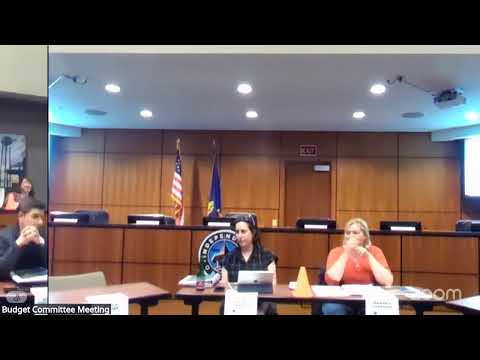
City staff presented the proposed fiscal year 2025–26 budget to the Independence Budget Committee on April 23, outlining a plan staff described as balanced but reliant on one‑time funds, new fees and further reductions if new revenue sources are not secured.
The proposed budget continues the city’s public safety fee but with staged reductions: the fee would drop from the current $20 per month to $17 on July 1, 2025, and to $10 on July 1, 2026; staff said the fee would then be indexed annually to the regional inflation measure described in the presentation to preserve long‑term purchasing power. Staff told the committee the fee supports hiring and retention of police officers over the next three years.
To address structural general‑fund shortfalls the staff presentation listed a package of recommended temporary measures that would generate onetime revenue or lower recurring costs if the council adopts them. Those recommendations, presented to the committee as proposals rather than final council decisions, included consolidating the museum and the library into a single community services department housed in the current library building; selling the museum building; selling at least one park property from a designated list; closing the Independence Civic Center on Fridays while keeping police operations open; and reducing public library hours by one day per week. Staff described these as temporary stop‑gaps and said that without new, ongoing revenue sources or deeper cuts the general fund would remain unsustainable.
Staff presented financial context and clarifying numbers: total budgeted expenditures across all funds were shown as about $31.8 million versus budgeted revenues of about $26.1 million (the presenter described a $5.7 million spending‑over‑revenue picture after clarifying an earlier $12 million figure); the general fund target beginning balance is $1.8 million (about four months of operations) and the forecasted beginning balance for FY25‑26 showed a dip to roughly $1.0 million. Staff said previous short‑term relief from American Rescue Plan Act (ARPA) funds had temporarily masked structural shortfalls, and that Measure 5 and Measure 50 have suppressed long‑term revenue growth.
Capital priorities highlighted during the presentation included the regional water treatment plant (staff warned of potential water constraints by 2028 if the plant does not come online), the Ninth Street pump station and associated sewer projects, Chestnut Street Bridge work, the Mount Fir Southern Arterial, and the Corvallis Road waterline. Staff said the city has secured important grant funding for some projects — for example, a $2.0 million state grant for Ninth Street pump station work and other grant commitments being pursued for the wastewater treatment plant (including federal and state grant applications and an Energy Trust incentive for aeration efficiency) — and that some project spending will come from system development charges (SDCs), rate revenue, grants, and loans. Staff explained SDCs are legally restricted to capacity‑increasing projects and cannot be used for ordinary operations or for repairs; staff described a workflow to spend rate dollars first and then true up SDC reimbursement when a project becomes SDC‑eligible.
Staff also gave a department‑by‑department summary of staffing gaps: police (short seven sworn officers to meet a cited national average of 2.3 officers per 1,000 population), economic development, finance (need for full‑time accounting support), IT (need for an additional technician and contractors for 24/7 monitoring), facilities (need for a maintenance mechanic), library (need for additional staffing and a full‑time director to restore service), planning and building permit staffing, and others. Staff said public‑works operations are largely supported by their own revenue streams and have added positions funded from those revenues.
Budget amendments and votes during the meeting • Emergency elevator repair and transfer: staff described an emergency repair to the city hall elevator and proposed increasing fiscal‑year 24‑25 estimated expenditures in the facilities vehicle and equipment replacement fund by $70,000 for the repair, reducing the FY25‑26 beginning balance by the same amount, and increasing the FY25‑26 proposed transfer from the general fund to that replacement fund by $70,000. A motion to amend the proposed budget to make these adjustments was moved and seconded during the meeting and approved by roll‑call; staff said the change reduces the general‑fund contingency and will be reflected in future budget crosswalks. • Scrivener and timing amendments: staff also proposed a set of small corrective amendments to move capital spending between FY24‑25 and FY25‑26 in several enterprise funds (water, sewer, transportation) to reflect actual project timing and to correct clerical errors; these were presented as balancing edits to keep cash flow and fiscal year accounting aligned.
Public comment A citizen who identified themselves as a resident of Independence urged the committee not to sell the pool property and suggested reviewing porta‑potty use in parks as a possible cost‑saving measure. The comment was recorded during the public‑comment portion of the meeting and staff acknowledged the written comment.
What the committee did and next steps The committee discussed the budget extensively with staff and asked clarifying questions about contingencies, the use and timing of SDCs, debt service and payoff timing, grant rollovers, and project cash flow. Staff committed to providing a crosswalk showing line‑by‑line amendments at the next meeting and to bring a report to council addressing audit findings. The committee approved the emergency elevator repair transfer amendment by roll‑call. Staff indicated the intent to take the approved budget to city council on June 10 for adoption and to file the adopted budget with the county in July, while holding additional budget committee meetings as needed through May and possibly into June.
The presentation emphasized that many of the proposed measures are temporary and that long‑term sustainability will require new recurring revenue or deeper, ongoing reductions to services.