Get Full Government Meeting Transcripts, Videos, & Alerts Forever!
Get email alerts on the Housing Programs topic
No spam. Unsubscribe anytime.
Council reviews state ‘moderate income’ revolving loan program to support workforce housing
Summary
City staff described a new state moderate-income revolving loan program that would let the city receive 0% loans to pass to developers as grants. Councilors asked about monitoring, ownership limits, default risk, SDC impacts and rural set-asides; staff will seek state clarifications and return with details.
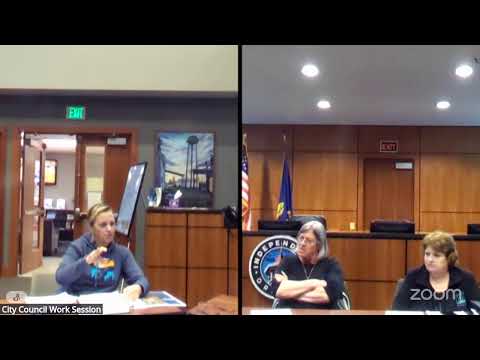
City staff presented a state-created “moderate income revolving loan” program to the Independence City Council on April 22, outlining how a zero-interest loan to the city could be passed to developers as a grant to support housing affordable to households at or below 120% of area median income (AMI).
The program, administered by the state and implemented locally, would let the city apply for a loan that could offset infrastructure costs and system development charges (SDCs). Repayment to the state would be structured as a fee in lieu of property taxes collected by the county assessor and remitted to the state; the program’s baseline payback period is 10 years. The city would receive a 5% administrative fee and the assessor would receive a 1% fee to offset administration costs.
The program is designed to support both rental and ownership products targeted at workforce households (roughly 80–120% AMI), a group councilors said often earns too much to qualify for lower-income housing programs but struggles to afford market housing. Staff told the council that developers have already expressed interest in projects that could meet the 120% AMI threshold.
Council discussion focused on implementation and risk. Questions included who would verify and monitor income eligibility, how ownership units would be restricted at resale, how the city would be protected if a project stalled or the grant could not be repaid, and whether local lenders could be brought into program designs. Staff said rental monitoring is relatively straightforward because property managers can be required to verify income; ownership monitoring is more complicated for subsequent resales and staff have asked the state how to handle re-qualification after initial sale.
Councilors also raised equity and fiscal concerns. Some members objected to the idea of offsetting SDCs for selected projects and suggested any reductions should be applied citywide; others said the program could further the long-standing council goal of helping first-time buyers remain in Independence. Staff clarified the program is not an automatic SDC waiver: the state funds would be used to pay SDCs or other eligible development costs and the city would retain SDC revenue rather than forgoing it outright.
Staff said the state (Oregon Housing and Community Services) is initially deploying an approximately $75 million statewide pool and has a rural spending floor intended to reserve portions of funding for rural communities; staff will seek written clarifications and try to schedule an OHCS representative to answer technical questions.
No formal action or vote was taken; council members signaled an informal consensus to continue exploring the idea and directed staff to gather additional details and state responses to outstanding questions. Staff said any local program would require a council resolution or ordinance, an intergovernmental agreement with the county assessor to administer the fee in lieu of taxes, and per-project council authorization before funds flowed.