
Supervisors debate county budget approach as rise in mandated costs looms
Get AI-powered insights, summaries, and transcripts
Subscribe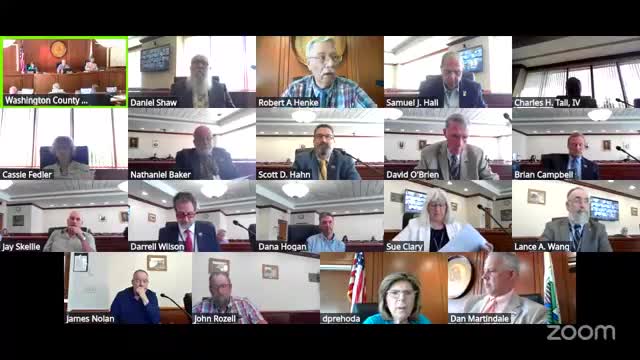
Summary
At the July Washington County Board meeting supervisors debated the county’s draft 2026 budget, with calls to identify mandated costs, consider department cut requests and ask departments to submit 5% smaller budgets; concerns focused on Department of Social Services spending and the limits of local control over mandates.
Washington County supervisors spent a significant portion of their July meeting debating the county budget, mandating versus discretionary spending, and possible pathways to reduce a projected tax increase.
Several supervisors said a large share of the county budget is driven by mandates that the county cannot easily change. Supervisor Roselle outlined budget pressures, saying the county has limited options to avoid tax increases because many costs are mandated and several large expense categories — including Department of Social Services (DSS) spending, contract wages and retirement contributions — could rise. Roselle described a scenario in which the county would otherwise need to replace previously used fund balance and warned that otherwise cuts would fall to essential services such as highways and public safety.
Supervisor Shaw said he could not support a proposed large increase in county spending and described the college budget increase as an example of a line-item he found too large. Multiple supervisors urged practical steps: one recommended asking every department head to submit a budget 5% smaller than the current year’s, while others asked for clearer identification of mandated versus discretionary items in the budget documents so the board could prioritize cuts.
Supervisor Knowles emphasized that though roughly 80% of spending was described as “mandated” on the floor, mandated programs can sometimes be delivered more efficiently; he urged the board to look for efficiency rather than assume all mandated spending is immutable.
No final county budget vote was taken during the meeting. Board members said they expect more detailed reconciliation in coming weeks and suggested the finance committee would review figures at an August finance meeting. One supervisor stated the board would ask for a reconciliation “in the next 2–3 weeks” and that the finance committee would meet Aug. 4 to consider revisions.
Less critical details: the discussion included references to capital projects that temporarily inflated monthly expense reports and to a current $141 million operating figure (noting interfund transfers), but detailed line‑item dollar amounts and final decisions were not adopted during the session.