
Renewable energy working group urges county to fund dedicated coordinator to speed grid interconnection and municipal projects
Get AI-powered insights, summaries, and transcripts
Subscribe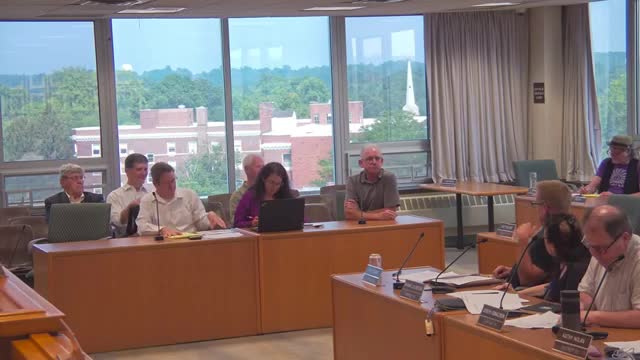
Summary
The Renewable Energy Implementation Plan (REIP) working group recommended the county approve a budget amendment to hire a dedicated energy coordinator to implement local projects, work with municipalities and advocate for technical changes at the state Public Service Commission to ease solar interconnection.
A county renewable‑energy working group told the Energy, Environment & Sustainability Committee on Aug. 5 that Ulster County should fund a dedicated energy coordinator to implement local pilot projects, support municipalities and press for technical reforms at the state level to reduce interconnection barriers.
Tom Conrad, representing the working group, said the “core recommendation for the county from the committee is that we really need to do a budget amendment to hire a dedicated energy person to coordinate in the county.” He said that person would lead projects such as a pilot to coordinate interconnection among several solar projects in New Paltz and would pursue regulatory changes.
Conrad and other members argued that some interconnection barriers are regulatory and technical—examples included flexible interconnection approaches and better use of excess capacity on the distribution system. “A flexible interconnection would allow the excess capacity on the grid, which is there 99 of the time to be used,” Conrad said, describing how current interconnection rules restrict use of that capacity.
Committee members debated how to staff the role. Some supported a full‑time county position housed in the Department of Environment to provide ongoing municipal support; others suggested a consultant model for pieces of the work. Conrad said the committee did not examine all staffing options but warned that the combined tasks could amount to “ideally, it would be 2 full time jobs.”
REIP members also described other technical priorities—hosting‑capacity maps, battery energy storage system (BESS) permitting and municipal zoning—and noted that different recommendations in the REIP report target the county, municipalities, utilities, the Public Service Commission and developers. Simon Strauss and other working‑group members offered to brief legislators on utility basics such as transmission vs. distribution and the importance of three‑phase lines for interconnecting solar and BESS.
The working group provided updated recommendations (dated July 16) to the committee and distributed printed summaries at the meeting. Committee members said they will continue discussing the recommendation during budget planning and as they consider an appointment for the Department of Environment director.
Why it matters: a single coordinator or a small dedicated team could speed municipal renewable projects, coordinate microgrid pilots and advocate at the state level for interconnection reforms that proponents say would lower costs and accelerate deployment. Committee members flagged both the potential workload and the need to align county priorities with state and utility processes.