
Ulster County committee pauses service agreement as agency warns tipping‑fee pressure after lower-than-expected tonnages
Get AI-powered insights, summaries, and transcripts
Subscribe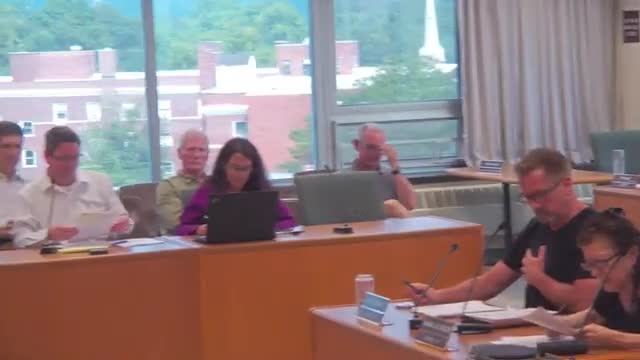
Summary
Ulster County’s solid‑waste agency reported lower‑than‑expected tonnages through June, and the legislature’s energy committee postponed a proposed service agreement with the county’s resource recovery agency to allow more stakeholder review.
Ulster County’s solid‑waste agency reported on Aug. 5 that municipal solid waste and construction/demolition tonnages are running well below projections through the first half of 2025, and the legislature’s energy committee postponed a proposed service agreement with the Ulster County Resource Recovery Agency to allow more stakeholder review.
The agency director, Mark Ryder, told the committee the county received 65,000 tons in the first six months of 2025 against a 12‑month target of 142,000 tons. “We have received 65,000 tons, against WSC and D combined. Our 12 month target was a 142,000,” Ryder said, and added that recycling collections so far total 6,533 tons, “included in that is food waste.”
Those lower tonnages affect the revenue base for the agency. Ryder explained how the tipping fee is structured: disposal and transportation costs run above $100 per ton, while roughly $35 per ton from incoming tonnage currently covers administration, outreach, and programs. “So if we are off our projected tonnages,” Ryder said, “that means we’re not getting that $35 a ton that goes towards offering free recycling … and the amount that we charge for food waste diversion and composting.” He also noted the current tipping fee level discussed in the meeting is $1.35 a ton.
Why it matters: tipping fees are set to recover expected operating costs; fewer incoming tons can force higher per‑ton fees or cuts to programs that support recycling and diversion. Ryder told the committee that July–September volumes often rise, but the shortfall through June would still push a reassessment of next year’s budget and the tipping‑fee projection.
Committee action and next steps: the committee postponed resolution 209, authorizing the chair to execute a service agreement with UCRRA, to give members and stakeholders more time to negotiate contract language. Legislator Nolan moved to postpone the resolution and Legislator Donaldson seconded; the committee voted to postpone and the chair said the postponement was unanimous. The chair also said she would form a short subcommittee to meet at least twice before the committee’s next meeting to review outstanding issues and to hear from stakeholders.
Director Ryder and other committee members emphasized that much of the agency’s revenue—about 98%—comes from tipping fees, leaving small contingency reserves and limited other funding options. Ryder recommended looking for revenue sources beyond tipping fees to sustain outreach and diversion programs.
Discussion points noted by members included: concern that raising tipping fees could run counter to waste‑diversion goals; whether a net service fee and bonding cap in a contract would constrain the agency; and the need to read and consider prior reform committee recommendations. The committee chair said she would circulate proposed subcommittee appointments the following morning and requested that appointees read the UCRRA reform committee recommendations before meetings.
Background and context: the committee heard a separate report that the agency staffed 64 hours at the county fair and reached 748 adults (a 44% increase from the prior year) and 340 children with outreach. The agency also scheduled a budget workshop the following week and said budget decisions, including tipping‑fee projections for 2026, would be revisited there.
The postponement preserves time for negotiations between the legislature, the executive branch, UCRRA, agency counsel and county attorneys before a final decision on the service agreement.