Get Full Government Meeting Transcripts, Videos, & Alerts Forever!
Get email alerts on the Homelessness topic
No spam. Unsubscribe anytime.
Hays County homeless coalition presents 2025 point‑in‑time count; urges Wimberley to clarify local referral steps
Summary
The Hays County Homeless Coalition presented HUD‑required point‑in‑time results for January 23, 2025 (55 unsheltered, 132 sheltered in county) and asked the Wimberley City Council to create a standard referral protocol so residents, first responders and churches know where to send people seeking shelter and services.
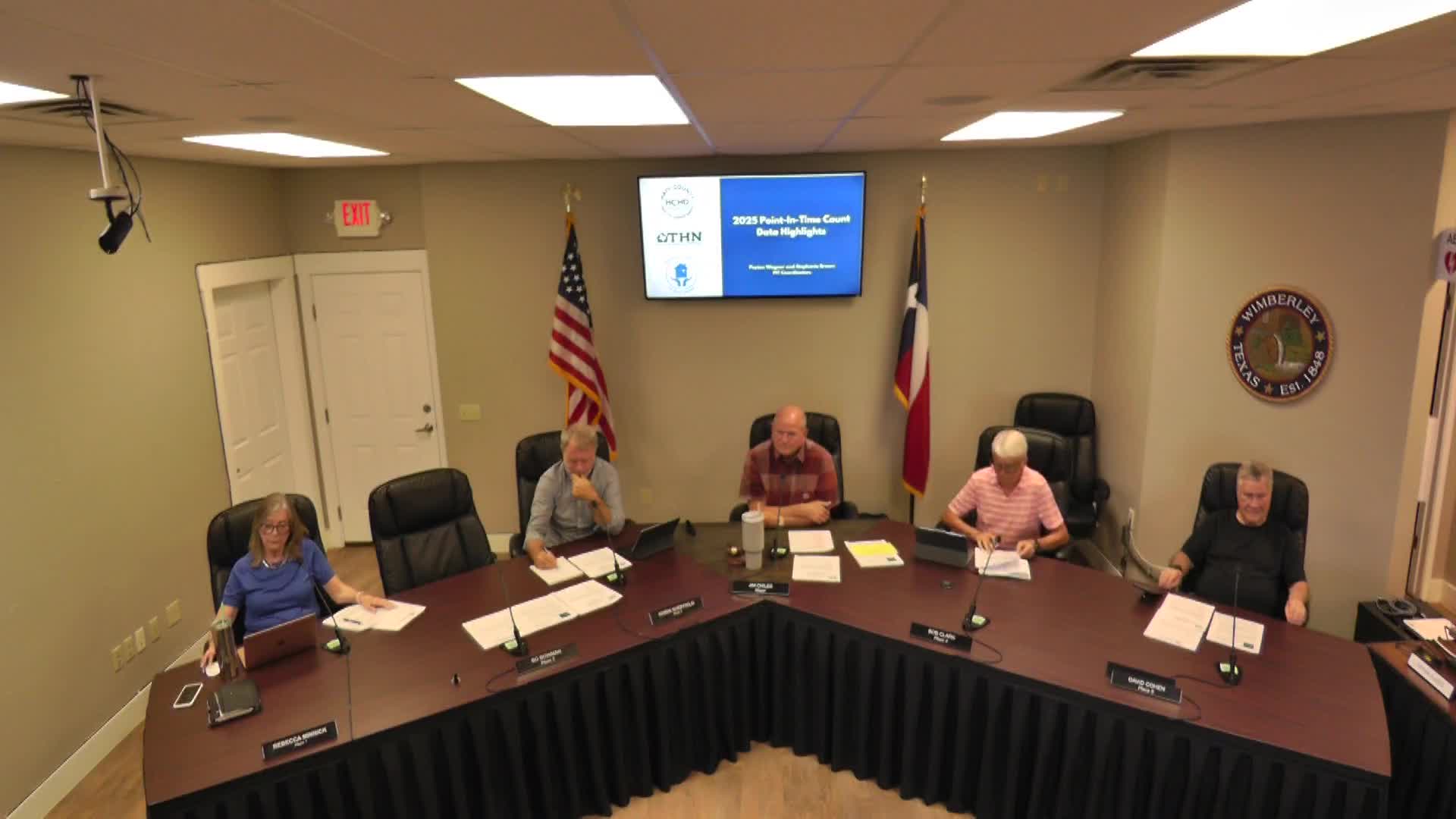
Nancy Heinz and Lisa Young of the Hays County Homeless Coalition presented county results from the federally required Point‑in‑Time (PIT) count and asked the council on May 15 to adopt a clear local protocol for referring people who seek shelter or services in Wimberley.
Heinz told the council the PIT count, required by the U.S. Department of Housing and Urban Development (HUD), provides a one‑night snapshot of homelessness; for Hays County the teams counted 55 unsheltered people and 132 people in shelter on the night of January 23, 2025 (the report also showed 18 observations that were included in the unsheltered total). Heinz explained the methodology (volunteer teams, mobile app Counting Us, interviews vs observations) and HUD definitions — for example, an RV without utilities is categorized as unsheltered.
Lisa Young, executive director of the Hays County Food Bank and co‑chair of the coalition, highlighted concern about very young children in eviction statistics and noted school‑reported McKinney‑Vento numbers: Wimberley ISD reported five students identified as lacking stable housing this reporting year (down from seven last year). Young said special populations captured in the PIT data — domestic violence survivors, veterans, people with serious mental illness, chronic homelessness — drive funding priorities for HUD and local programs.
Both presenters asked the city to adopt a standard operating procedure so that when constables, churches or citizens call seeking help, they are referred to the correct local provider. Heinz said callers had received inconsistent guidance during recent freezes and extreme weather; she noted Barnabas Connection in Wimberley is the community nonprofit most commonly referenced for local assistance and asked the council to clarify whether Barnabas or another site is the local point of contact. Heinz and Young also raised the need for coordinated county guidance about opening emergency cold‑weather shelters (Southside uses a 35°F threshold; Heinz said county discussion has included aligning trigger temperatures and protocols).
Council members asked questions about county coordination and existing shelter resources. There was no council motion; staff and council agreed to explore whether an SOP or referral list could be prepared and shared with emergency management, constables and other local agencies.