
Keep Angleton Beautiful board approves FY2025–26 budget, keeps reserves intact
Get AI-powered insights, summaries, and transcripts
Subscribe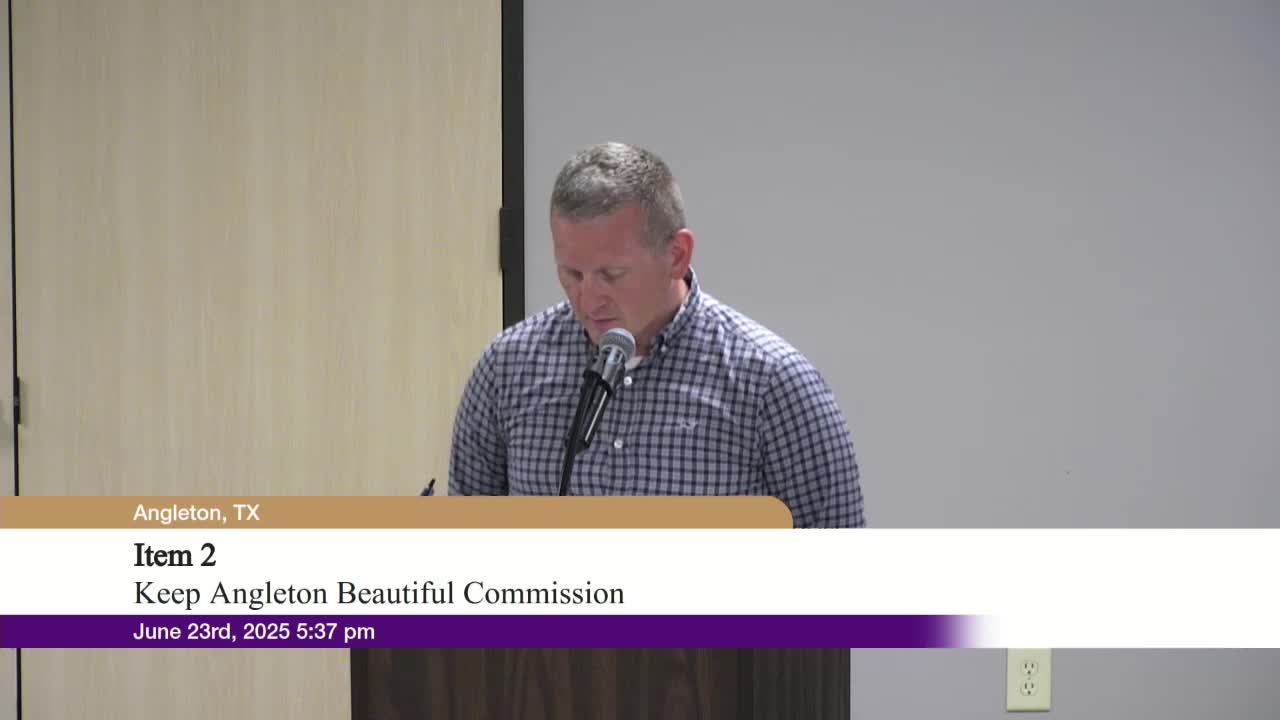
Summary
Keep Angleton Beautiful approved a proposed FY2025–26 budget that trims overall spending to about $59,000 while keeping fund balance reserves near $91,000 and preserving funding for spring and fall cleanup events.
Keep Angleton Beautiful (KAB) board members voted to approve a proposed fiscal year 2025–26 budget at their June meeting, adopting spending plans that reduce total expenditures while keeping reserves available for community cleanups and programs.
The budget packet shows anticipated revenue just under $60,000 and a projected fund balance of just under $91,000 after the year. Jason, staff member for Keep Angleton Beautiful, told the board the agency had received an unplanned boost in grant funding: “We did get extended an opportunity to increase the amount of money that HDAC is gonna provide for us,” he said, noting that change would add a little more than $5,000 to revenues and help offset spring cleanup costs.
The board and staff framed the vote as fiscally cautious. The proposed budget reduces overall expenditures from roughly $71,000 to $59,000, while adding personnel line items so Parks and Public Works staff time for the spring and fall cleanup events is budgeted rather than absorbed unexpectedly. Cleanup costs were increased in the draft to $20,000 to ensure the city can run both major events without relying on uncertain grant awards. Travel and training are budgeted to allow up to eight attendees if the Keep Texas Beautiful conference is held in person.
Board members discussed revenue streams the draft treats conservatively. Jason reported KAB donation receipts tied to the city water-bill program stood at $13,308.04, and that trash-bag sales remain steady but require about $1,800 more to meet a stated target. He also warned that paint-recycling costs can be high; the most recent invoice for paint recycling was about $2,700 versus nearly $5,000 for the first event, a factor the board said informed a cautious revenue forecast.
A board member moved to accept the FY2025–26 budget as presented and another seconded; the motion was approved by voice vote. The board noted the budget will be presented to Angleton City Council in July for final adoption or further amendment. Staff said any awarded grant revenue would be added later as a midyear adjustment rather than assumed in the baseline budget.