School board advances student-dismissal, release and school-to-work policy revisions to second reading
Summary
The school board voted 4-0 to advance revisions to policies JHE (student dismissal precautions), JHE-R (authorization for release for errands off school grounds) and JHE-R1 (school-to-work agreement) after staff summarized wording and formatting changes intended to clarify authorization, parental options and work-placement supervision.
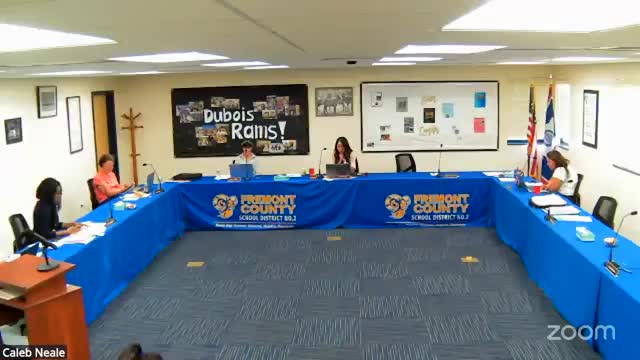
During a school board meeting, the board voted 4-0, with three members absent, to advance revisions to policies JHE, JHE-R and JHE-R1 to a second reading at the board’s next regular business meeting.
The revisions were described in detail by Dr. Walters (role not specified in the transcript), who said the edits mostly clarify language and reorganize existing material rather than introduce new substantive requirements. "Students will be permitted" replaces the former phrasing that used the word "pupil," and references to parents, verification procedures and designees were added or clarified, Dr. Walters said.
The changes summarized by Dr. Walters include: replacing the term "pupil" with "student" throughout JHE; adding that, "if requested by the teacher, the principal shall verify the authorization" when there is concern; explicitly including a "designee" who may verify authorizations; moving from a signed requisition to a requirement that JHE-R be "completed and on file"; adding use of the district "parent portal" as an acceptable contact method for early-release notifications; and inserting an explicit phrase that release must be "for proper reasons and into the proper hands" aligned to JHE-R as appropriate.
For JHE-R the staff revisions clarify permitted off-campus class-related departures and add examples of non-school-related purposes (the transcript uses the example term "joyriding"), and replace informal phrasing such as "stopping for a soda." The language now describes that privileges may be revoked and that infractions are subject to school disciplinary actions. The section that had been a long, agreement-style paragraph was reformatted: parent options for when a student may leave are presented as a bullet checklist (for example: on foot for school business; in the parent’s vehicle without passengers for school business; as a passenger), and parental acknowledgment language was updated to read "for my child" instead of "for my son or daughter."
The JHE-R1 revisions, described as a condensed and reformatted version of a lengthy agreement, specify eligibility for the school-to-work agreement by grade level rather than age: "Student must be enrolled in grades 11 or 12, or otherwise approved by the principal," the staff summary says. The draft also requires that work-based placements be directly supervised by a designated worksite supervisor and coordinated through the district's work-study coordinator or a designee. The revision breaks responsibilities into discrete sections for employer responsibilities, school responsibilities, student responsibilities, and indemnification language drawn from the original text.
Board members asked technical and scope questions during the discussion. One board member asked whether the policy should specify grade levels or ages; Dr. Walters said the current draft specifies grades 11 and 12 and that the board could choose to specify by grade level or by age if it preferred. Board members also requested that the staff provide the revised policy text with changes highlighted; Dr. Walters said, "I absolutely could share that with all of you. Absolutely." That request was noted as a direction to staff.
After discussion, the board chair (unnamed) called for a motion to advance the three policies to a second reading. Dr. Walters moved to advance the policies; another board member seconded. The board chair announced, "The motion passes 4 to 0, 3 absent." The board then voted to enter executive session, with a motion stating the session was "for personnel safety and security and student matters;" that motion also passed 4-0. The board’s announced next step for the policies is a second reading at the next regular business meeting; the chair noted that if the draft does not receive majority approval at the second reading it will be eliminated from further consideration.
The board’s actions were procedural: the revisions were forwarded for further consideration at a subsequent meeting rather than adopted as final policy.
Ending The revised policy drafts will return to the board for a second reading at the next regular business meeting; staff will provide the board with the redlined or highlighted versions showing the precise language changes prior to that meeting.