
Kennel County trustees discuss armed-educator policy, training and possible stipend; decision tabled
Get AI-powered insights, summaries, and transcripts
Subscribe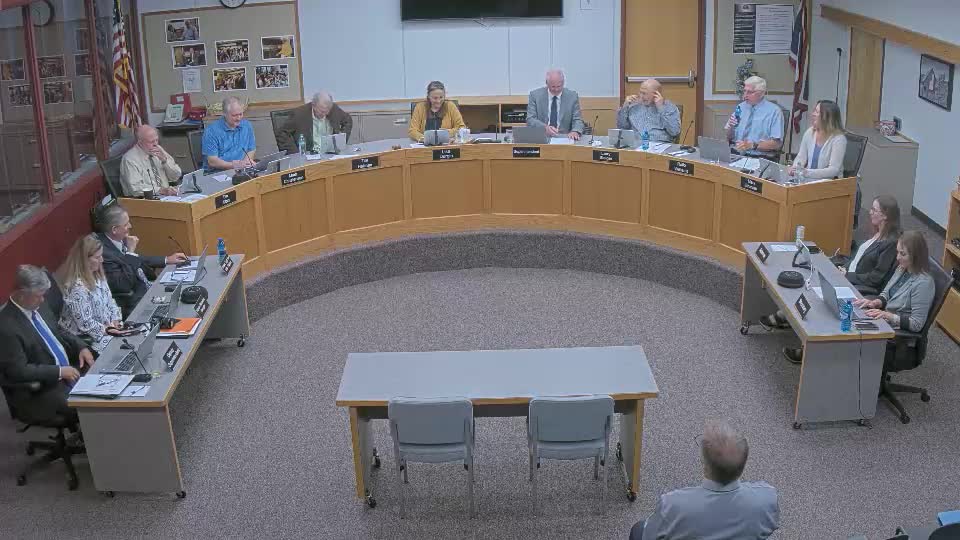
Summary
The board discussed requirements and logistics for a new armed-educator program, including a 36‑hour training requirement, confidentiality and a proposed $500 stipend; trustees agreed to delay a decision until more information on reimbursement and payroll confidentiality is available.
Trustee Mrs. Berger opened discussion of the district's new armed-educator policy, saying, "the employees that are willing to stand up and go through the training and the psychological exam and be accountable to help protect our children in our schools, should just get a thank you from the school district." The board spent more than an hour debating training hours, compensation and confidentiality, then agreed to table the matter for a future meeting after gathering more information.
The board heard that the program's initial applicant requirements include a 36-hour training course provided by the City of Gillette and the Campbell County Sheriff's Office. A staff member identified as Brandon said the training would be "the biggest piece" and that law enforcement partners are set to provide curriculum and scenario-based instruction.
Trustees pressed administrators on compensation if training takes place outside regular hours. Board members said the district could pay hourly supplemental pay for weekend training, or include training during the workday as professional development with regular pay. Mrs. Berger proposed a one-time $500 stipend as a gesture of appreciation for volunteers; Trustee Christiansen and others discussed whether that would create a perverse incentive.
On confidentiality, administrators said the district intends to keep the identities of approved armed educators as private as possible. Chair Dr. Harris explained the application requires notarized acknowledgments and supervisor sign-off and said law enforcement would be notified. The district will send a general notice to parents when armed educators are in the district but said it would not specify buildings.
Trustees asked whether state reimbursement is available for training costs. Trustee Hallahan noted the legislature included reimbursement language in the recent law change that took effect July 1; several trustees asked staff to confirm whether that legislation covers stipends or training expenses. The board also asked payroll and accounting staff about processes to preserve confidentiality if supplemental payments are made.
The board did not adopt a stipend or formal compensation policy at the meeting. Trustee Brunner said she would like to know the number of applicants, but administrators declined to provide counts, citing privacy and concern about perception. The board agreed to revisit the issue at the next meeting after staff research on state reimbursement, payroll confidentiality and partner scheduling.
The board's next steps: staff will return with details about potential state reimbursements, payroll options to preserve confidentiality and any costs for weekend training; the trustees will place the item on the next agenda for further discussion or a possible motion.