
Campbell County board forms executive committee to draft cell-phone policy after months of debate
Get AI-powered insights, summaries, and transcripts
Subscribe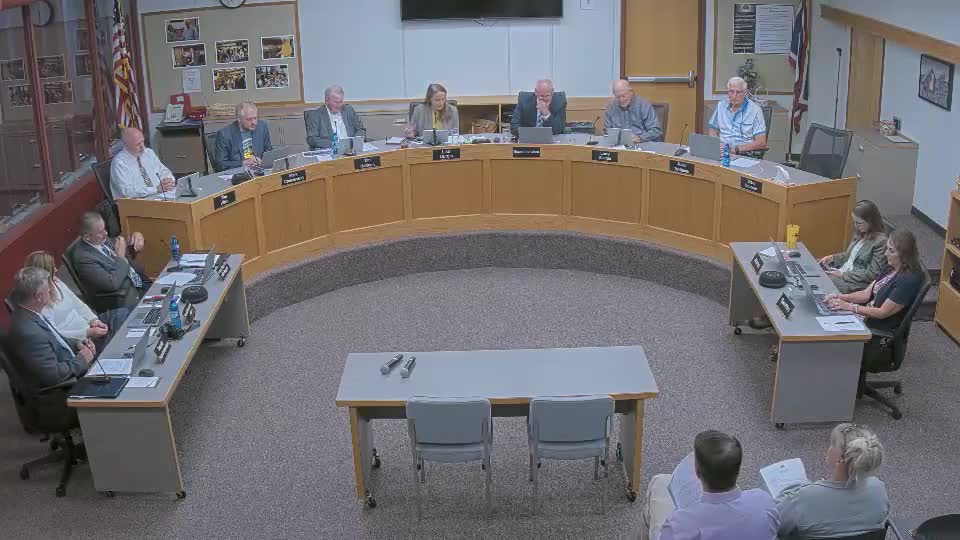
Summary
The Campbell County School District board agreed to form a two-tier committee — an executive group of three board members plus administrators and a broader advisory group of principals, teachers, students and parents — to study the district's cell-phone policy and return recommendations to the full board.
The Campbell County School District Board of Trustees on Monday agreed to form a two-tier committee to study and recommend changes to the district's cell-phone policy, an issue trustees said could affect everything from student focus to bullying and classroom instruction. Board members said the process will include an executive committee of a few board members and administrators and a larger advisory committee of principals, teachers, students and parents that will gather testimony and draft recommendations for the full board. "I do think with the level of interest, in weight of this topic of 3 board members is appropriate," Trustee Dr. Ayers said during discussion, adding he favored a blended approach that includes administrators and some representatives of affected groups. Why it matters: Trustees described cell-phone rules as a districtwide issue that could affect classroom management, student mental health and practical implementation at school sites. Several trustees warned that any change should come only after public hearings and time to implement an approved policy. Board members debated two models: a smaller, board-centered committee composed of three trustees who would hear testimony and draft recommendations, and a broader committee reflecting district stakeholders. Trustee Emlen Adams said the topic was "recommended to us by the governor and by the superintendent of public instruction, missus Nagelfeldt," and emphasized that the board should retain final decision-making authority. Discussion highlights and process agreed: Trustees emphasized transparency and community input. Multiple members urged inclusion of principals and teachers, noting that implementation challenges would fall to school administrators. Trustee Christian said a blended model with board co-chairs and administrators could strike the right balance and recommended public hearings once a proposed policy is drafted. Drafting will also take into account an existing electronic device policy already on the books; district staff said that policy could be edited or replaced depending on committee findings. Structure and appointments: The board chair proposed forming both an executive committee and a broader advisory committee and said she would "appoint Dr. Mallon, myself, and Tim Elgin to that committee, and we will within a month, we'll make a broader announcement of what that looks like based on our conversation." The board directed staff to support the committees and to schedule public hearings if a new policy is proposed. What’s next: The executive committee will convene first to outline scope and timeline; staff said any formal policy change would follow the district's two-hearing rule for new policies and, if adopted, an effective date would likely be set for the start of the next school year to allow students, parents and staff time to prepare.